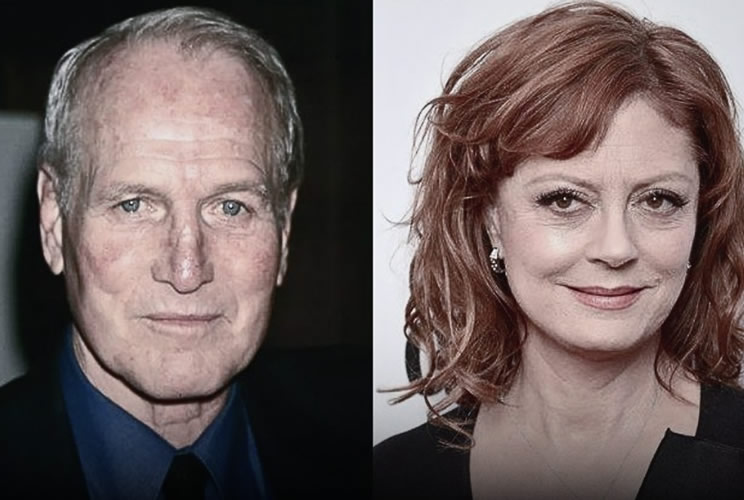
Susan Sarandon: In 1998, Sarandon was cast in "Twilight", a noir thriller alongside two Hollywood legends: Paul Newman and Gene Hackman. She was an Academy Award-winning actress by then - "Dead Man Walking" had earned her the Oscar just two years earlier. She wasn't a newcomer; she wasn't unproven: she was at the top of her career - but she was still making less than her male co-stars.
When contracts were being finalized, the producers invoked something called 'favored nations'" - a clause that's supposed to guarantee equal pay among top-billed actors. It's Hollywood's way of saying: everyone at this level gets treated the same.
Except they didn't mean everyone: they meant the two men.
Newman and Hackman were getting 'favored nations' treatment - Sarandon was not.
When Newman found out, he didn't issue a statement. He didn't give an interview about fairness. He didn't wait for someone else to fix it.
He walked into the producers' office and said simply: "I'll give her part of mine."
Years later, Sarandon recounted the story to BBC Radio 5 Live, her voice still carrying a mixture of gratitude and disbelief. "They said it was 'favored nations,' but they only meant the two guys. He stepped forward and said, 'Well, I'll give you part of mine.' So yeah, he was a gem."
A gem: that's the word she used for a man who saw injustice happening in his name and refused to let it stand.
This wasn't a publicity stunt. Newman didn't announce it; he didn't make sure the press knew. He just quietly redistributed his own salary to ensure his co-star was treated fairly - because he understood something fundamental: when you benefit from an unfair system, staying silent makes you complicit.
Sarandon later compared Newman's action to what Emma Stone experienced decades later, when her male co-stars in "Battle of the Sexes" took pay cuts to ensure she received equal compensation. "That happened to me with Paul Newman at one point," Sarandon said, connecting the dots between two generations of men who understood that equality isn't just something you talk about - it's something you sacrifice for.
But here's what makes Newman's gesture even more powerful: this wasn't an isolated moment of conscience. It was consistent with who he was.
Paul Newman spent decades using his privilege, his fame, and his resources to make the world more equitable. He donated over $500 million to charity through Newman's Own, his food company. He funded cancer research, children's hospitals, and educational programs. He co-founded the Hole in the Wall Gang Camp for seriously ill children. He showed up, again and again, in ways that cost him something.
And when it came to Susan Sarandon's paycheck, he showed up there too.
The film industry has a pay equity problem that persists to this day. Women - especially women of color - consistently earn less than their male counterparts for equivalent work. Studies show the pay gap exists at every level, from entry-level positions to A-list stars. And when actors speak up about it, they're often labeled "difficult" or "ungrateful."
But when Paul Newman spoke up, he didn't just talk. He opened his wallet.
That's what real allyship looks like - not performative statements or hashtags or theoretical support. It's recognizing when you're on the beneficial side of an unfair system and choosing to redistribute that benefit - even when no one's watching, even when it costs you something, even when you could have just stayed quiet.
Susan Sarandon didn't need Paul Newman to rescue her: she was successful, talented, and powerful in her own right. But she did need someone with equal standing to refuse to accept preferential treatment at her expense - and Newman gave her exactly that.
Today, Susan Sarandon is 78 years old and still acting, still speaking out, still fighting for equity in an industry that has been slow to change. Paul Newman passed away in 2008 at age 83, leaving behind a legacy that extends far beyond his legendary film career.
But this story - this quiet, unreported moment where Newman gave away part of his salary to correct an injustice - might be one of the most important things he ever did.
Because it showed what progress actually requires: not just awareness, not just sympathy, not just good intentions - but action, sacrifice, a willingness to say: "If the system treats me better because of who I am rather than what I've earned, then I refuse to accept that advantage."
Paul Newman didn't just play heroes on screen: he was one in real life - one paycheck at a time. |