 |
 |
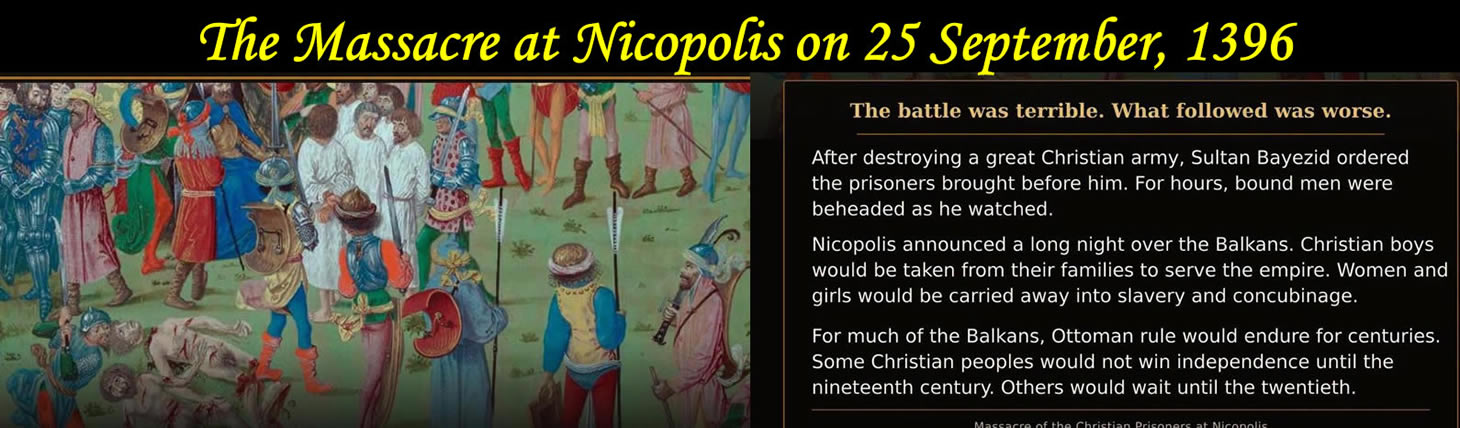
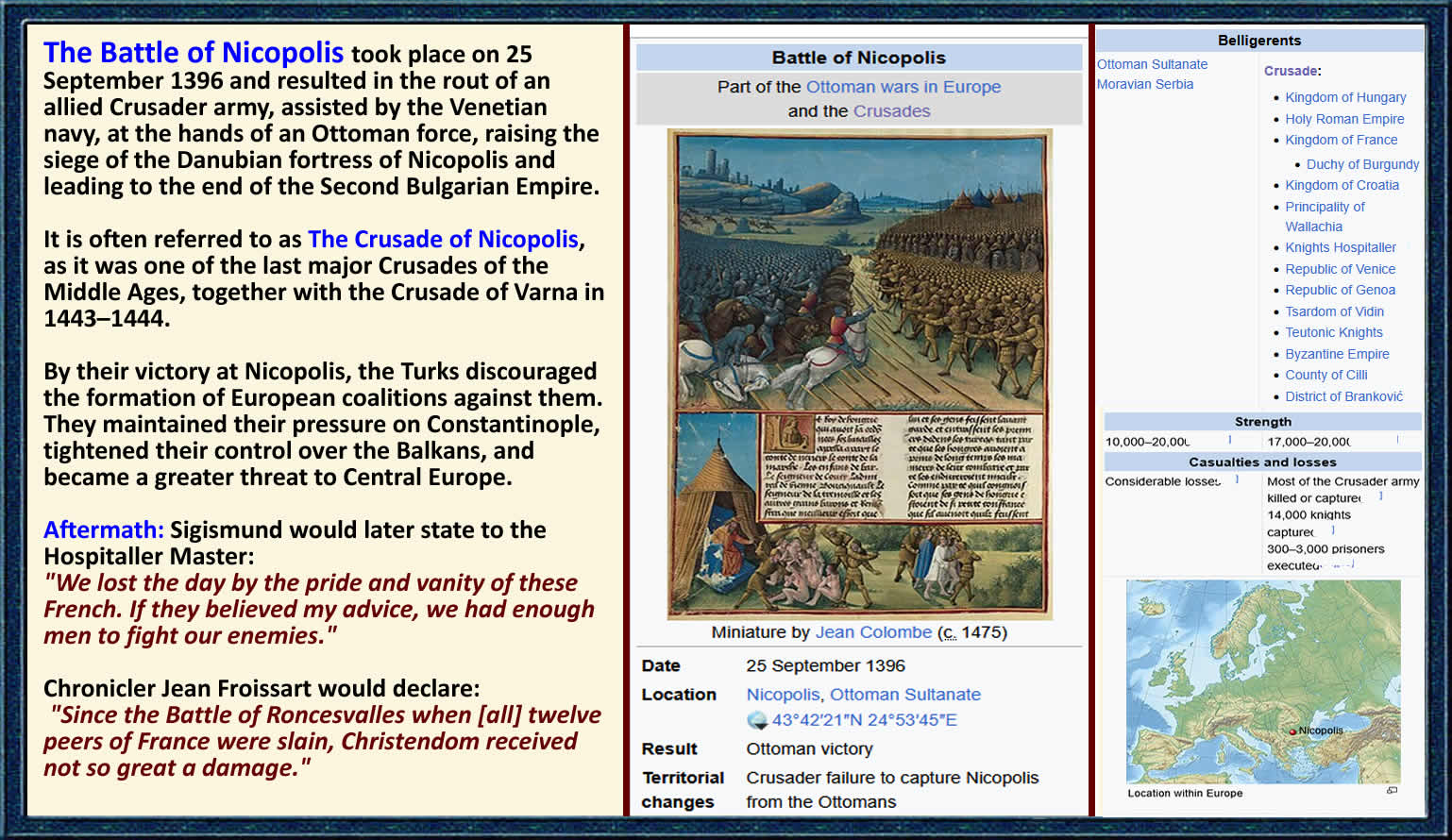
On September 25, 1396, one of the greatest Christian armies assembled during the late Middle Ages was destroyed beside the Danube. The battle was terrible. But what happened the following morning was worse. The prisoners were brought before the Ottoman sultan Bayezid I with ropes around their bodies. Many had been stripped. Knights, archers, servants, and wounded soldiers were forced into lines beneath the eyes of the man they called the Thunderbolt. Then the killing began. Only the wealthy and politically valuable could hope to survive. They could be ransomed. The ordinary soldiers, however, had nothing to offer. So Bayezid watched as they were beheaded. Among the prisoners was Johann Schiltberger, a sixteen-year-old Bavarian who had accompanied his knightly master on crusade. He had survived the battle only to find himself bound to two other captives and driven before the sultan. The men beside him were killed. Schiltberger was spared because of his youth. He would never forget what he saw. The disaster had begun with a desperate appeal from Eastern Europe. The Ottoman Empire was advancing through the Balkans. Christian kingdoms had fallen or been reduced to vassalage. Countless had been dragged away to feed the insatiable hunger of the Islamic slave markets. Even Constantinople was under pressure. Hungary now stood dangerously exposed. So King Sigismund of Hungary called for help. French and Burgundian knights answered. So did Germans, Hungarians, Wallachians, Hospitallers, and warriors from across Christian Europe. They crossed the Danube carrying banners, armor, and absolute confidence. They believed Bayezid would flee at the news of their approach. He did not flee. The crusading army reached Nicopolis, a heavily fortified Ottoman stronghold in present-day Bulgaria, and began a siege. Bayezid raced north to meet them with reinforcements. King Sigismund understood the Ottoman way of war. He urged the French knights to wait and allow the more lightly armed Wallachians to test the enemy’s lines. But the French refused. They had traveled too far, spent too much, and dreamed too long of glory to surrender the honor of the first charge. Their armored cavalry thundered forward. At first, the attack appeared unstoppable. The knights smashed through the Ottoman front ranks and drove uphill beneath clouds of arrows. But Bayezid had placed sharpened stakes before his deeper infantry lines. Horses fell. Knights were thrown into the dust. Others dismounted and continued on foot, burdened by armor and exhausted by the climb. When they reached the ridge, they discovered that the army they thought they had defeated was still waiting for them. Ottoman cavalry closed around their flanks. The French fought savagely, but they were isolated. When Sigismund advanced with the remaining Christian forces, Serbian cavalry serving as Ottoman vassals struck his army and helped break it apart. The crusade completely collapsed. Men fled toward the Danube. Some drowned beneath the weight of their armor. Others reached the ships only to find them overcrowded. Schiltberger later wrote that desperate men clinging to the vessels were beaten away and left to disappear beneath the water. Sigismund escaped. But thousands did not. When Bayezid surveyed the battlefield and saw the bodies of his soldiers, he ordered the Christian prisoners brought before him the following day. What followed was a calculated massacre of bound men. The executions continued for hours. Schiltberger remembered one Bavarian nobleman calling out to the Christians waiting to die: “Stand firm. When our blood is spilt for the Christian faith, we shall become children of heaven.” Then he knelt. His head was struck from his body. The precise number killed cannot be known. Medieval chroniclers spoke of thousands, perhaps exaggerating the total. But the central fact is not disputed: Bayezid ordered a mass execution, spared valuable nobles for ransom, and allowed the bloodletting to continue from morning until late in the day. Eventually, even his own counselors fell to their knees and begged him to stop. Nicopolis shattered the greatest Western attempt yet to halt the Ottoman conquest of the Balkans. The Islamic empire continued its advance, destroying another Christian army at Varna in 1444, capturing Constantinople in 1453, and eventually carrying its banners to the gates of Vienna. But it was there, in 1683, the tide finally turned. King John III Sobieski of Poland led a Christian army down from the heights and broke the Ottoman siege. Yet many Balkan Christians would wait centuries longer to reclaim their lands and independence. During those centuries, Christian boys were taken to serve the empire, while women and girls were carried away into slavery and concubinage. Nicopolis was not the end of Christianity in the Balkans. But it was the beginning of a long and terrible night. DEVOUT MUSLIMS DID THIS |