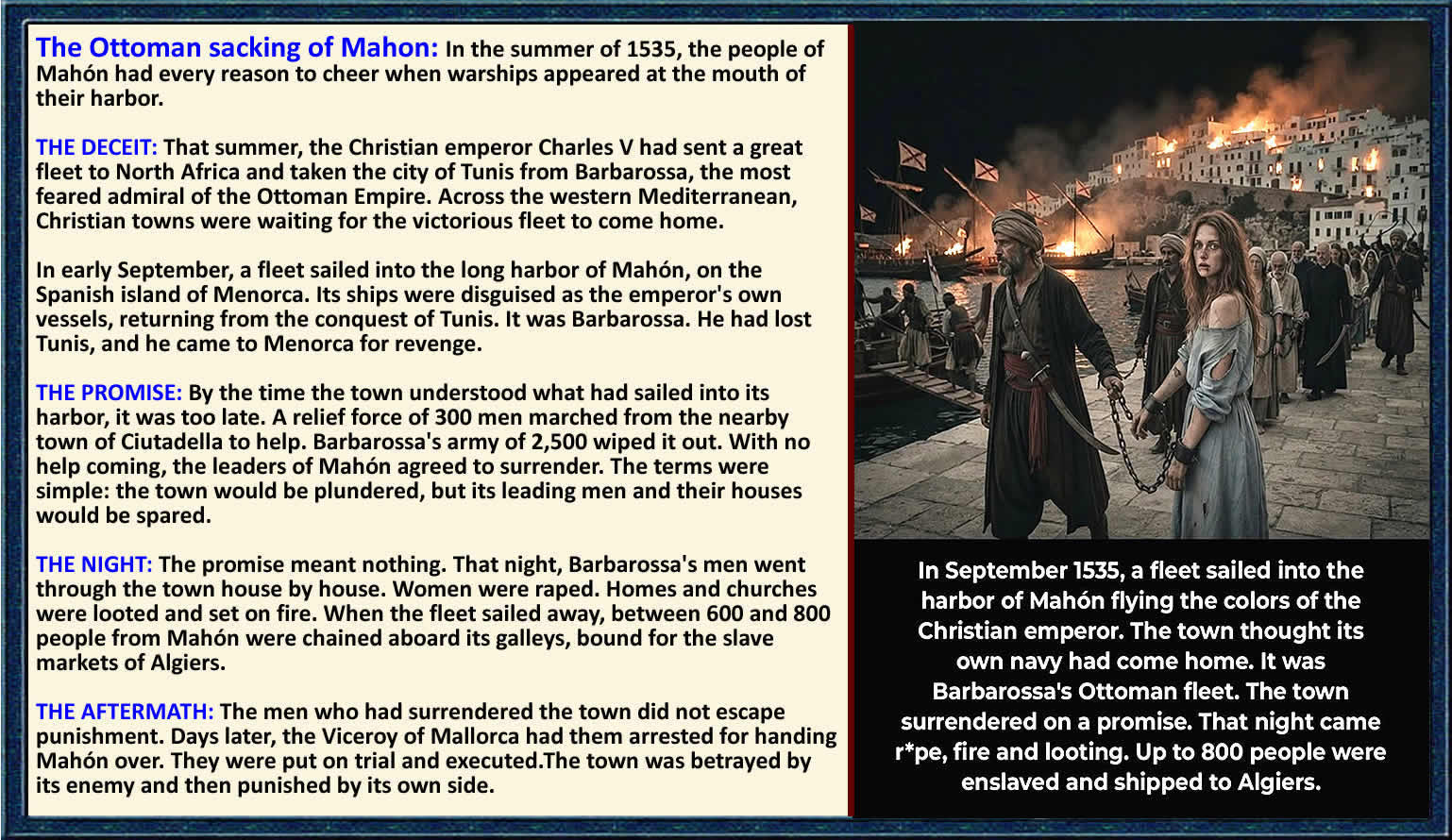
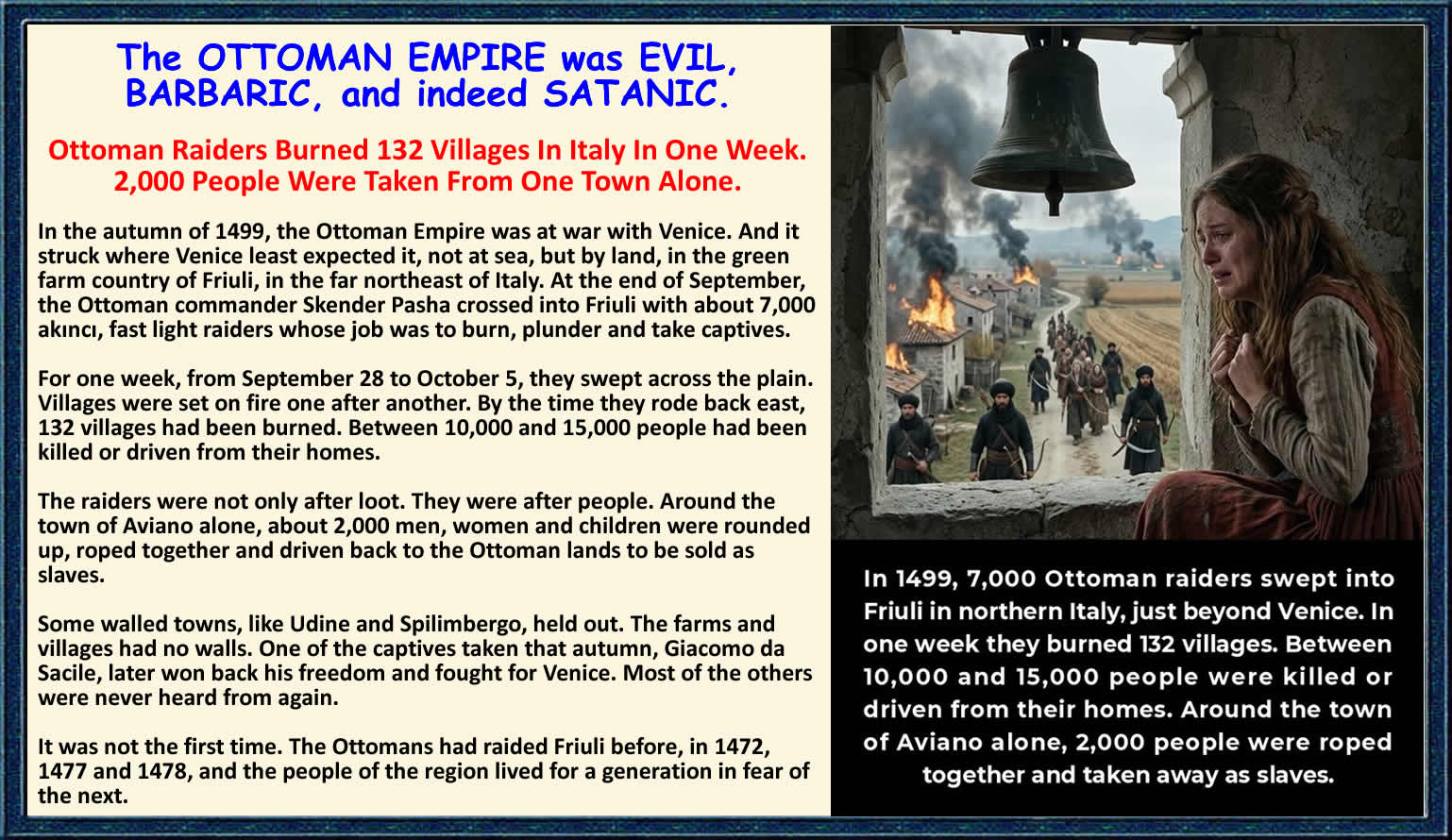
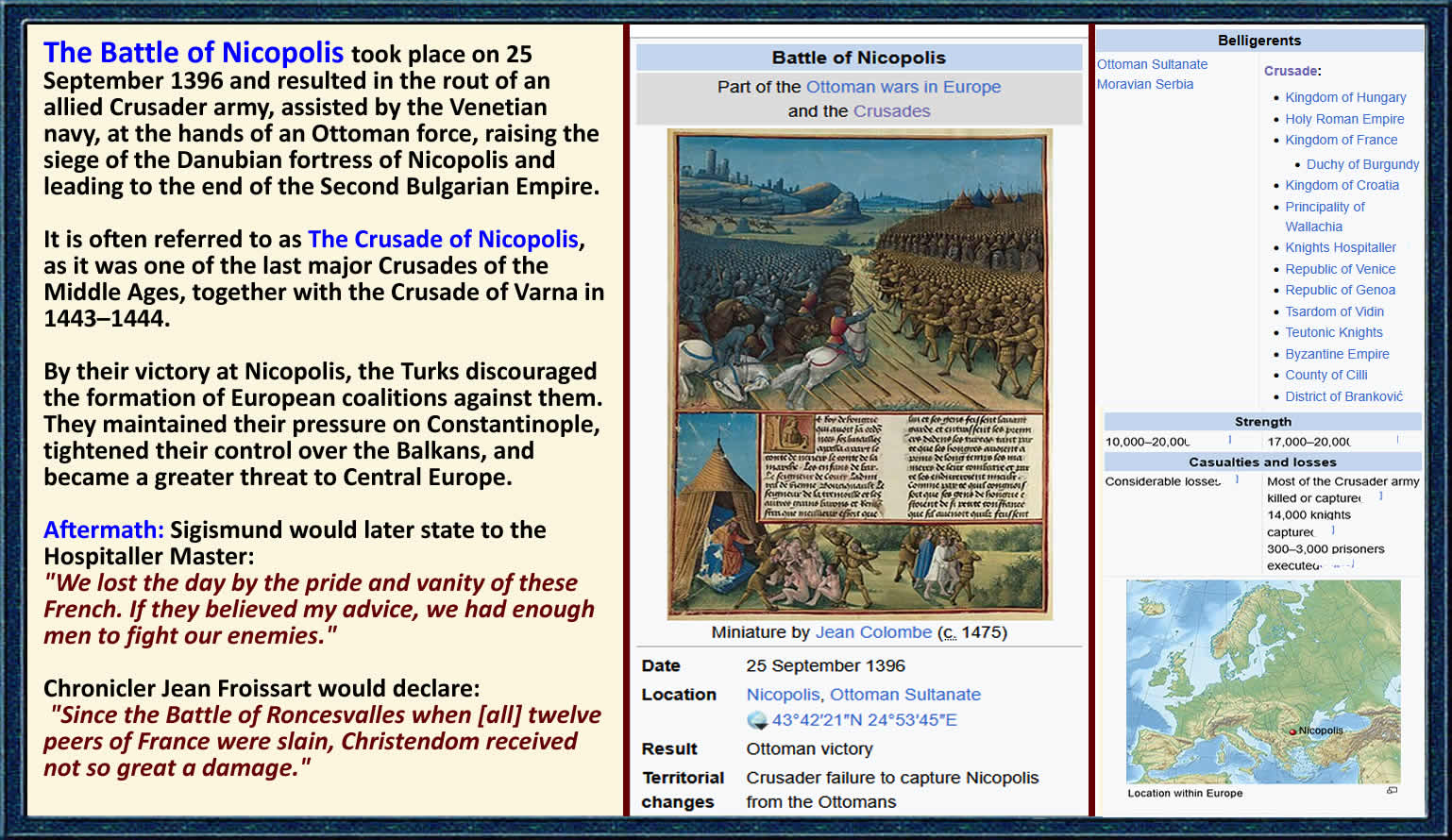
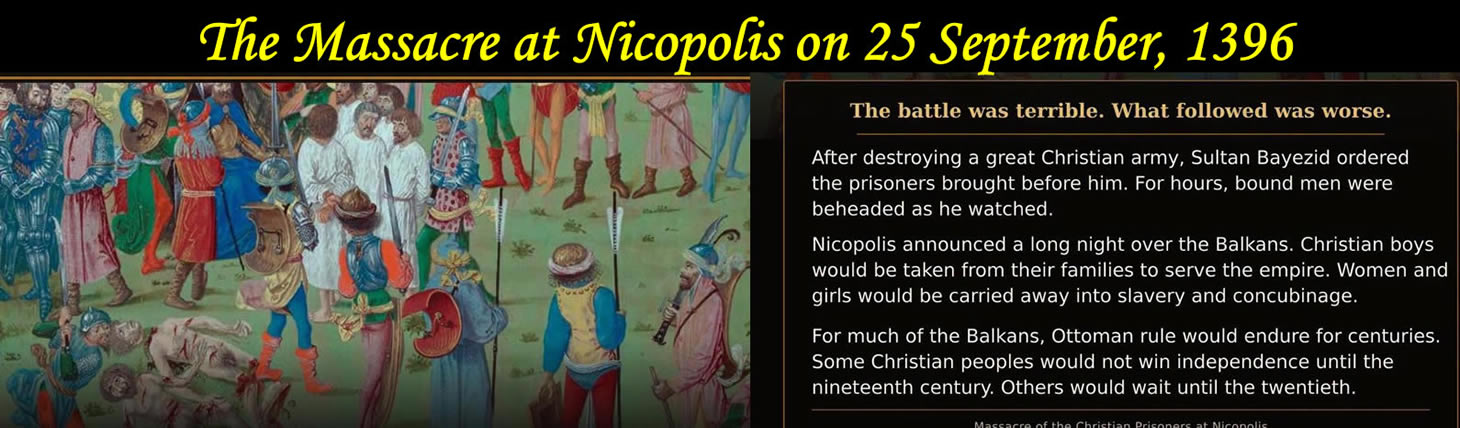
 |
 |
 |
|
 |
 |
||
 |
 |
 |
 |
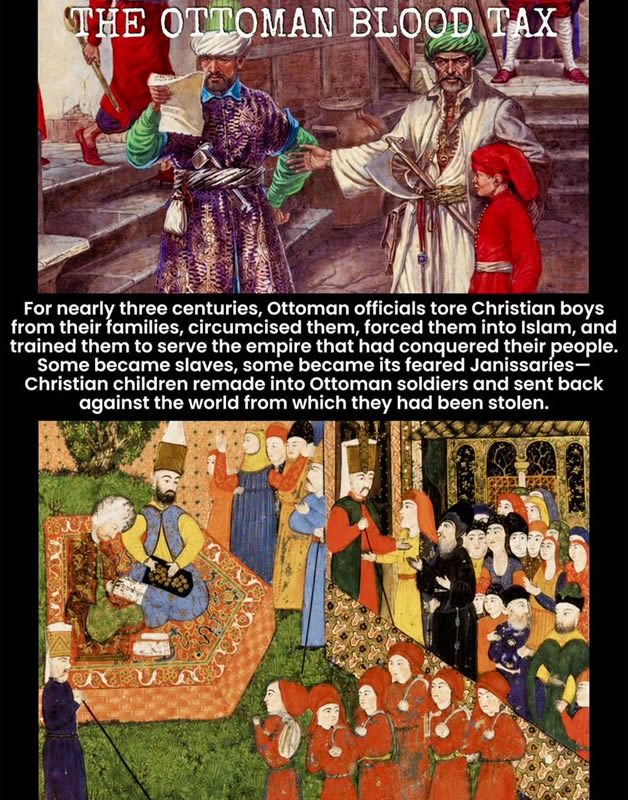
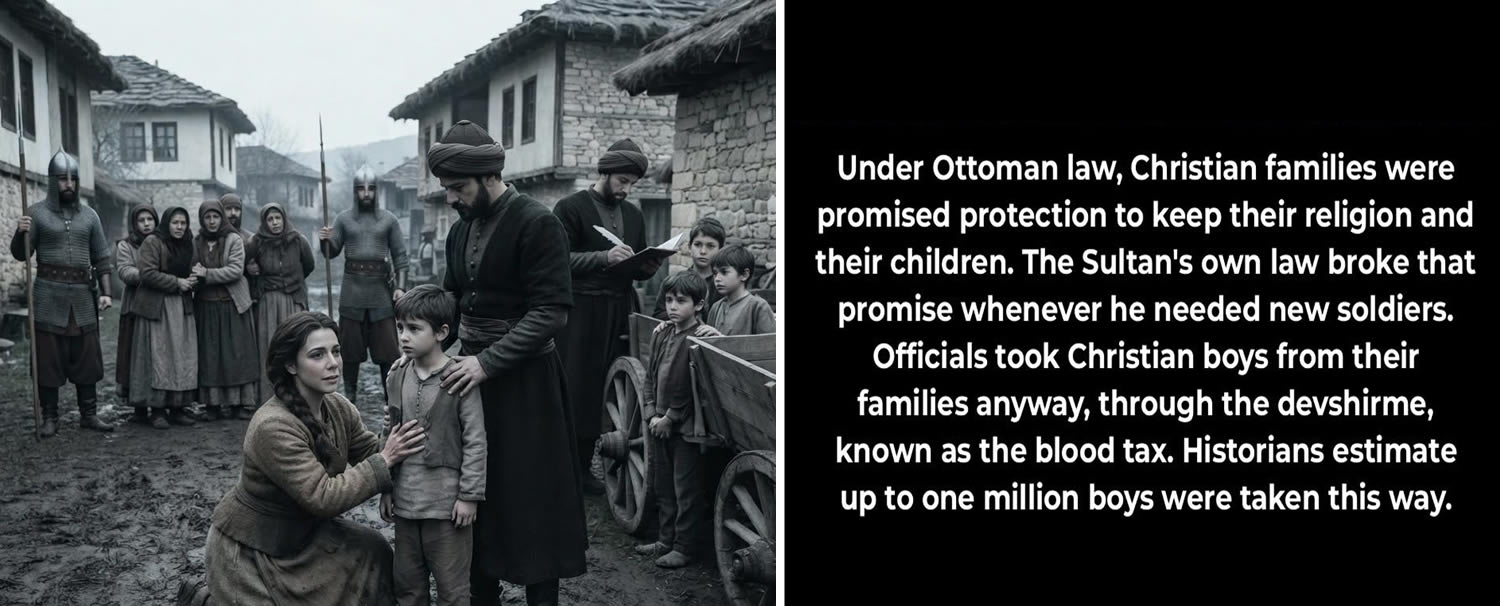 The Ottoman official arrived with armed men and an order from the sultan. Christian families were commanded to bring out their sons. The boys were made to stand in a line while the officials moved among them, examining their faces, teeth, limbs, and bodies. Priests were forced to produce baptismal records. Fathers watched as strangers decided which children were strong enough, handsome enough, and intelligent enough to be taken. The chosen boys were registered by name. Their height, complexion, scars, and other features were recorded so they could be identified if they escaped. Then they were led away. Some mothers followed the columns, weeping and calling after their sons, until the guards forced them back. The boys were bound together or marched under armed watch toward Constantinople. Many would never see their families again. The Ottomans called it the devsirme, meaning “collection.” The Christians of southeastern Europe called it the blood tax. Beginning in the late fourteenth century, Ottoman officials periodically entered Christian villages and took their boys for the service of the sultan. Greeks, Bulgarians, Serbs, Albanians, Bosnians, Armenians, and other conquered Christians were subjected to the levy. Parents hid their sons, falsified their ages, married them early, or scarred their bodies in hopes that the collectors would reject them. Some boys fled into forests or escaped from the columns carrying them away. Resistance could bring beatings, imprisonment, or worse. Once taken, the boys became the sultan’s slaves. They were circumcised and forced to convert to Islam. Their Christian names were replaced with Muslim ones. They were forbidden to practice the faith of their parents and separated from the language, customs, and people that might remind them who they had been.
Many were sent to farms in Anatolia, where they performed hard labor while learning Turkish and Islamic practice. Others entered palace schools.
Their training was deliberately merciless. Contemporary observers described hunger, exhaustion, savage beatings, and punishments intended to break disobedience. Enslaved palace boys were also vulnerable to sexual exploitation by powerful men. We cannot know how many suffered it, but their isolation and legal powerlessness left them with little protection from those who owned and supervised them. Many of the boys eventually entered the Janissaries, the elite infantry of the Ottoman army. They became disciplined archers, musketeers, palace guards, and assault troops. They stormed breached walls, defended the sultan, and formed the iron center of Ottoman armies. Janissaries helped capture Constantinople in 1453. They fought at Kosovo, Varna, Mohács, Malta, and Vienna. Boys taken from Christian villages were transformed into soldiers of Islam and sometimes sent to conquer or kill people who spoke the languages of their childhood. The system made conquered Christians surrender the children who would help conquer still more Christians. In one documented levy beginning in 1603, Ottoman officials collected 2,604 boys. That was one collection. The levies continued across generations. No complete total survives, but tens of thousands of boys were taken, and probably far more, over nearly three centuries. The devsirme declined during the seventeenth century as Janissary positions became increasingly hereditary and Muslims gained admission to the corps. The systematic taking of Christian boys finally disappeared in the early eighteenth century. For nearly three hundred years, however, Christian parents lived with the knowledge that an Ottoman official might appear, inspect their children, and choose which son they would lose. DEVOUT MUSLIMS DID THIS
|
 |
|
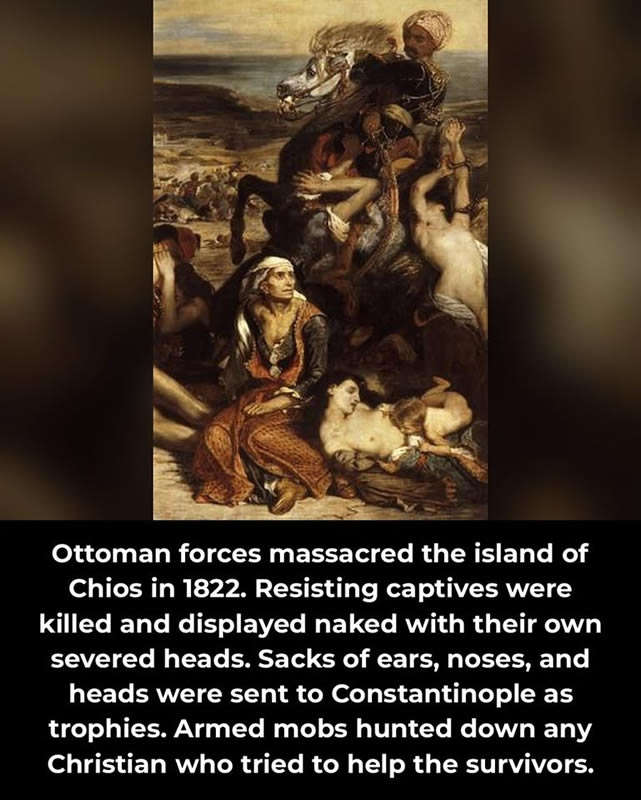 |
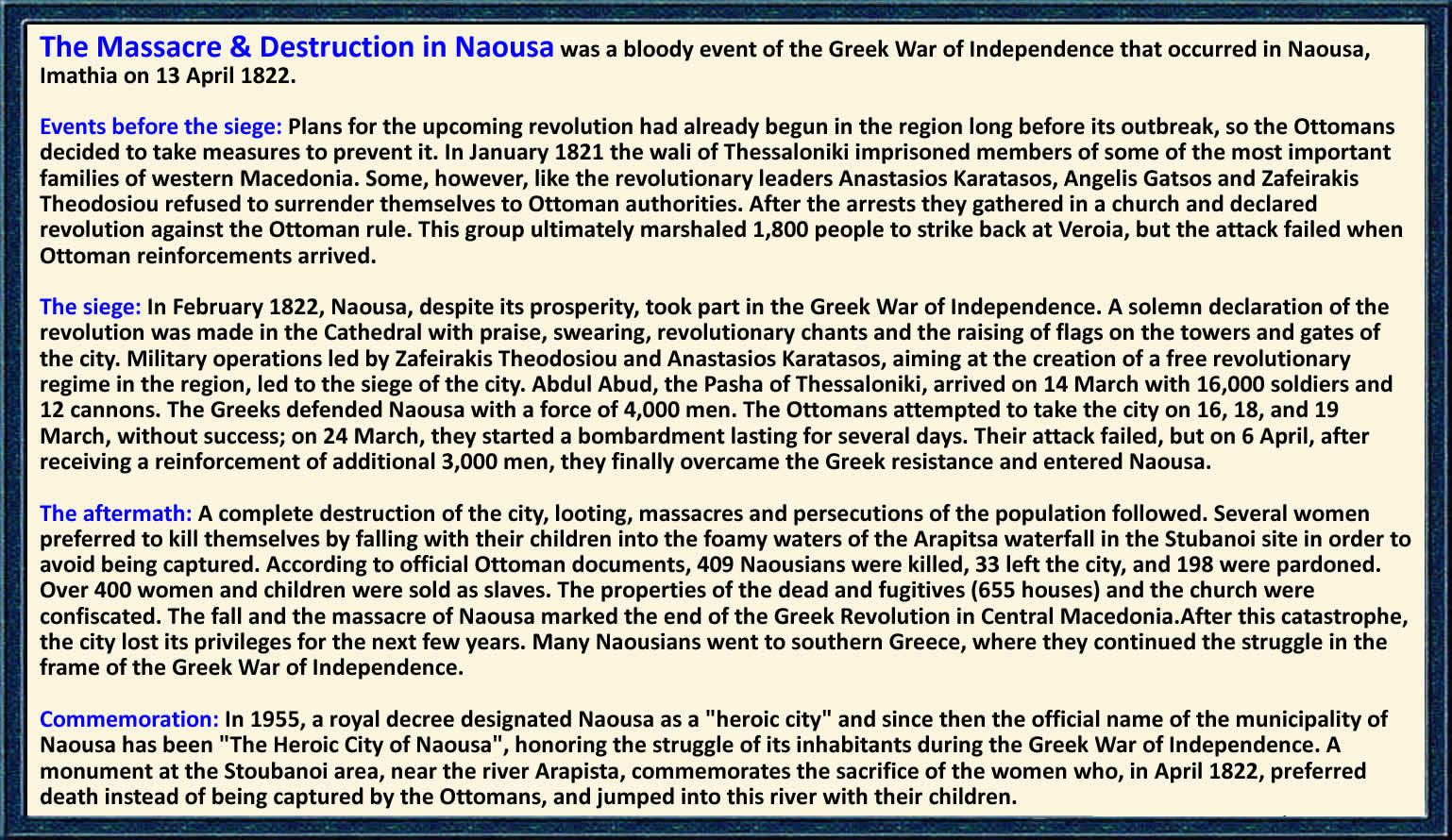
| In 1822, Muslim Turks captured two Greek Christian women in Naousa and attempted to force them to convert to Islam. They smeared them with honey on the head and tied them exposed, so as to receive the stings of wasps and of passers-by. The first woman, wife of Captain Zafeirakis, was then built into the wall up to the neck in the church of Hagia Sophia in Thessaloniki. She was left there for days for the entertainment of the wild mob that went there cursing and hitting her head with sticks as it protruded from the wall. She did not back down for a moment, strengthened until her last breath by prayer, and she never abandoned her Christian faith. Her martyrdom lasted five days. A passing gypsy woman, to hasten her end, threw a large stone at her, and thus the blessed one delivered her heroic soul into the hands of God, Whom she did not deny. The other woman, Maria Karatasou, wife of Captain Karatasos, refused to change her faith, and for this Muhammad Pasha Abu Nabbut enclosed her in a sack with deadly snakes, where she was martyred. The historian Eustathios Stougiannakis writes: "The acute venom diffused into the veins of the martyr from the bites, however, killed her in sweet lethargy, praying until the last moment for her executioners and invoking the Most High and the Virgin." And Pouqueville describes in the darkest colors to the civilized world the dramatic scenes he saw with his own eyes there: "Many women naked were put up to the neck in sacks with cats, snakes, and mice." The lifeless bodies of these holy women were eventually thrown into the sea. These events took place during the Naousa massacre on 13 April 1822 - just 200 years ago. 409 men were killed and over 400 women and children were enslaved. DEVOUT MUSLIMS DID THIS |
 |
 |
 |
Seven Thousand People Were Taken in One Raid. The Market Couldn't Even Handle It.
In the spring of 1544, an Ottoman fleet under Hayreddin Barbarossa sailed into the Bay Barbarossa had just spent the winter fortified in Toulon, commanding thirty thousand Turkish soldiers on French soil as part of an alliance between the Ottoman Sultan and the King of France. When spring came, he turned that fleet south. He moved through the islands and coastal towns of the Kingdom of Naples, striking one after another. There was no single battle. There didn't need to be one. Coastal villages had almost no way to fight back against a fleet that size. Boats were burned. People were rounded up and marched onto ships before help could arrive from inland. THE NUMBER Seven thousand people: taken from one stretch of coastline, in one campaign, in a matter of weeks. That number wasn't just a tragedy for the families involved; it broke the slave market itself. Algiers had never seen an arrival like it. Slave traders had a saying for what it looked like when the ships came in: it was raining Christians in the city. Prices collapsed almost overnight. There's a recorded phrase from the time that says it plainly: a person could be traded for a single onion. That wasn't an exaggeration written for effect. It was simply what a human life was worth once seven thousand of them arrived in the same market at once. Most of those seven thousand people don't have names that survived. What survived instead is the saying. Historians still repeat it today, the way it was repeated in Algiers in 1544. "Somewhere, someone paid an onion for a person." |
DEVOUT MUSLIMS DID THIS
|
||||
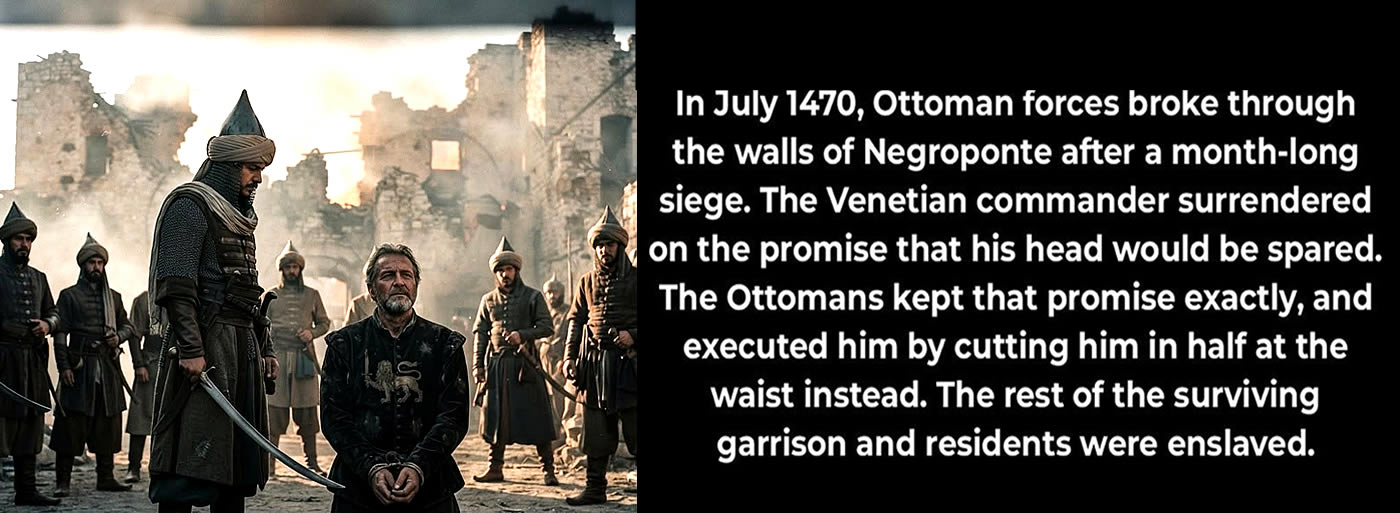
They Promised To Spare His Head. They Kept That Promise. THE SIEGE: In June 1470, Sultan Mehmed II personally led an Ottoman army against Negroponte, the Venetian-held capital of the island of Euboea. The siege lasted nearly a month. A Venetian relief fleet arrived close enough to break it, but its commander lost his nerve and withdrew, sealing the city's fate. |
 |
 |