 |
 |
|
The plague that destroyed the Roman Empire was not the Black Death — it was a different disease entirely, killed five thousand people a day at its peak in Rome, lasted fifteen years, and the emperor who presided over its worst phase declared himself a living god to stop his subjects from blaming him for it.
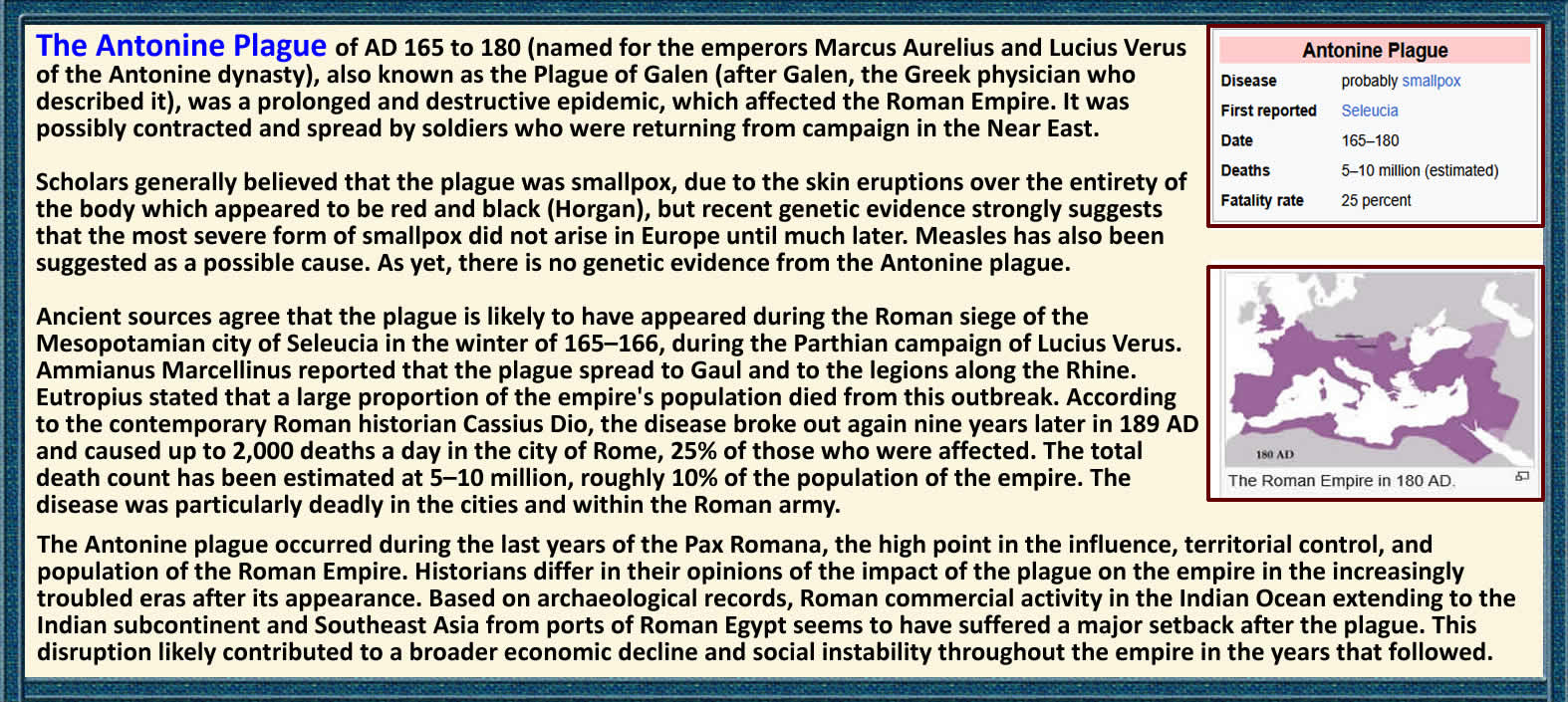
The Antonine Plague, which struck the Roman Empire between approximately 165 and 180 AD, is considered by historians including William McNeill and Kyle Harper to be one of the pivotal demographic catastrophes of the ancient world, killing an estimated five to ten million people across the empire and reducing Roman military and economic capacity at the precise historical moment when external pressures on the frontiers were intensifying. The disease was brought back from the Roman campaign in the Parthian Empire by returning troops and spread along the empire's road and trade networks with a speed that the interconnected Roman infrastructure facilitated. Ancient sources described symptoms including fever, diarrhea, vomiting, thirst, and a pustular skin eruption, leading modern epidemiologists to propose smallpox as the most likely pathogen, though the diagnosis cannot be confirmed from historical descriptions alone. |