 |
 |
| The morning of September 5, 1986 started like any other.
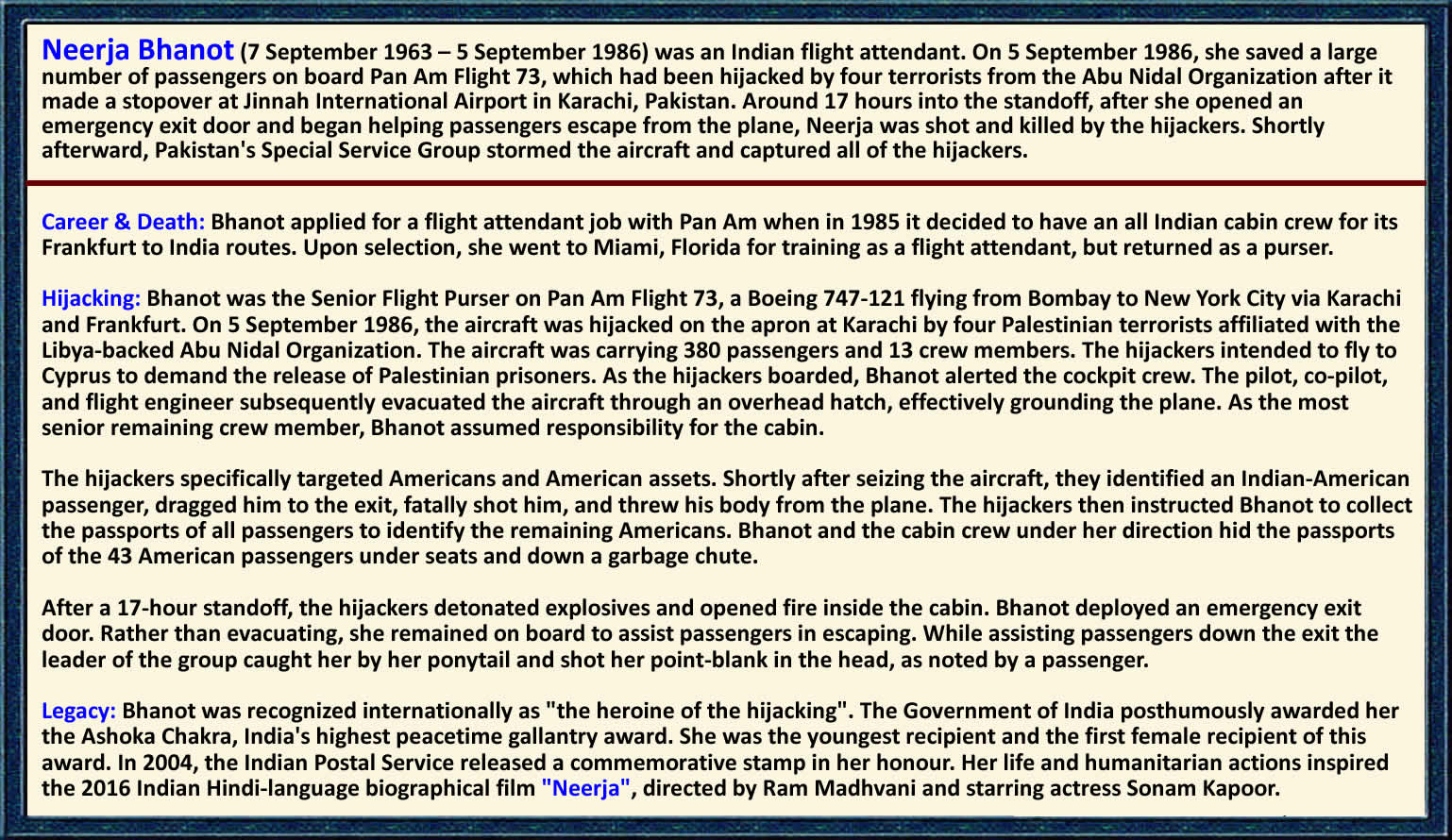
Pan Am Flight 73 had departed Mumbai on its way to New York, with scheduled stops in Karachi and Frankfurt. It was a routine leg of a routine international route. Passengers settled in. The crew worked. The sky outside was ordinary.
At approximately 6:00 AM, four heavily armed men dressed as airport security personnel crossed the Karachi tarmac in a van with wailing sirens and boarded the plane.
They opened fire in the air as they came through the door.
In the next few seconds, the most important decision of the entire day was made.
Neerja Bhanot was 22 years old. She had been born on September 7, 1963, in Chandigarh, India — two days after the date she would die. She had grown up in Mumbai, worked as a model endorsing brands before joining Pan Am, married at 19, found the marriage difficult, and returned to her family. She had been with Pan Am for less than a year when she was assigned as senior flight purser on Flight 73. The standoff lasted 16 hours. Through all of it, Neerja moved: she calmed passengers; she worked alongside her fellow crew members. When the hijackers ordered her to collect all passengers' passports — sensing that Americans would be their primary targets — she and her crew gathered the passports and hid the American ones under seats and in the trash chute. The hijackers identified and executed an American passenger, Rajesh Kumar, to enforce their demands. The killing was real. The danger was not abstract. Everyone on that plane understood what was happening. Neerja kept moving.
As night fell and the plane lost electrical power, the hijackers, realizing their plan had failed entirely, opened fire on the passengers. Neerja Bhanot died on September 5, 1986. She would have turned 23 two days later.
She was posthumously awarded India's Ashok Chakra — the nation's highest peacetime gallantry honor. Pakistan awarded her the Tamgha-e-Pakistan and the Nishan-e-Pakistan. The United States awarded her the Special Courage Award.
She was the first woman and, until 2003, the youngest person ever to receive the Ashoka Chakra.
In 2016, a Bollywood film called "Neerja" dramatized the hijacking and her role in it. It was seen by millions of people. Here is what stays with you when you hold all of it together:
she was 22 years old. She had been on the job less than a year. She had experienced heartbreak in her personal life and come home to rebuild. She was two days away from turning 23, and in the first seconds of the hijacking, before she could think too carefully, she sent the hijack code and gave three pilots the chance to escape -and then for 16 hours she kept going.
And at the end, with an open door and a path to survival right in front of her, she turned back toward the children. Rest in grace, Neerja Bhanot - the world hasn't forgotten. |