The bell on the third floor meant one thing: MOVE - NOW.
The people hiding in the attic of a boarding
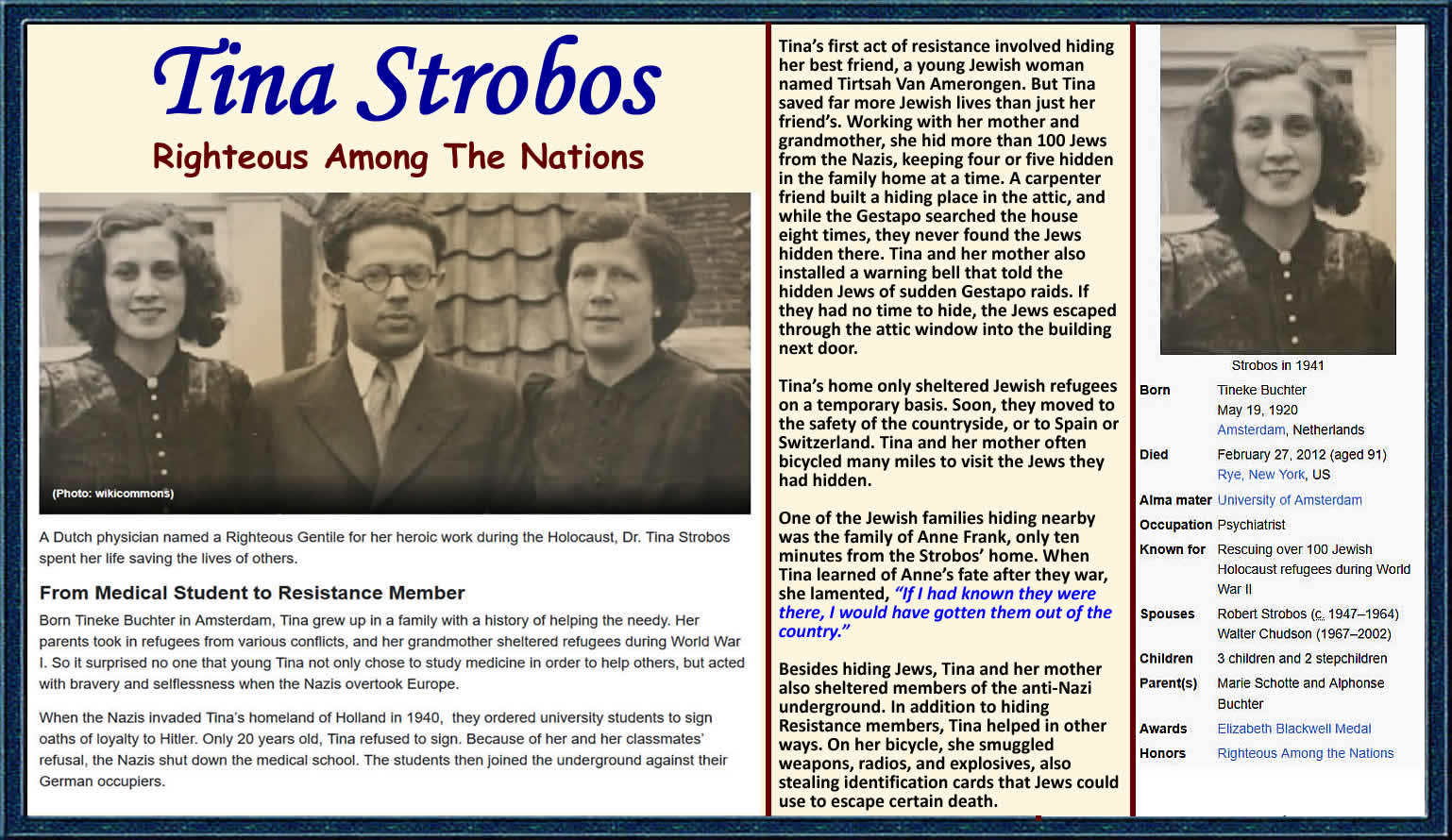
house in Amsterdam had maybe forty seconds — forty seconds to scramble across the floorboards, press themselves behind a false wall, and pull it shut before the footsteps on the staircase reached them. It was 1942. The city outside had been rewritten by men with lists, and a twenty-two-year-old medical student named Tina Strobos had quietly decided she was going to fight them. It started with a knock on the door. An old family friend — a well-known Jewish labor leader — stood on the step, marked and desperate. Tina's mother Marie looked at her daughter and said plainly: "You know we can get killed." Tina was twenty years old. She thought about it. Then she said: "I would rather be killed than live in a Nazi society." That was the moment. From that night on, three generations of women — grandmother, mother, daughter — ran a resistance operation out of their own home on Nieuwezijds Voorburgwal. A carpenter from the underground came and built a hidden compartment inside the attic gable. When he finished, it was nearly invisible. Tina installed the warning bell. They rehearsed the escape route over and over — out the window, across the gutter, into the school next door if the compartment ever failed. It never failed. The Gestapo came eight times. Eight times the bell rang. Eight times the bodies disappeared behind the panel. Eight times Tina answered the door in her student dress — fluent in German, flustered, apologetic, a young woman who clearly didn't understand what they were looking for. They tore the house apart. They stood directly beneath the hidden wall. They found nothing. Abraham Pais was a young Jewish physicist — someone Tina had once been close to. In early 1945, he was betrayed and taken by the Gestapo. Tina walked into their office with nothing but her voice and a letter of support from the renowned physicist Niels Bohr. She argued that Pais was a young man of rare genius. She refused to leave. They let him go. Pais moved to America. He collaborated with Albert Einstein. He became one of the most respected physicists of the twentieth century. He lived a full life — because a young woman in wartime Amsterdam simply would not stop arguing. By the time liberation came, more than a hundred people had passed through the Strobos household. Most of them survived. Not one was ever caught inside those walls. Tina finished her degree. She became a psychiatrist in New York. For decades, her patients sat across from a soft-spoken doctor and had no idea what she had done in that house at the age of twenty-two. In 1989, Yad Vashem honored her and her mother as Righteous Among the Nations. But there was one thing she said she could never stop thinking about. Anne Frank had been hiding ten minutes from her front door. Tina never knew. She had the network. She had the forged papers. She had the routes. She just didn't know."If I knew they were there," she said quietly, "I would have gotten them out." Some heroes are celebrated in their lifetime. Some carry their victories — and their what-ifs — in silence for sixty years. Remember her name: Tina Strobos. |