 |
 |
|
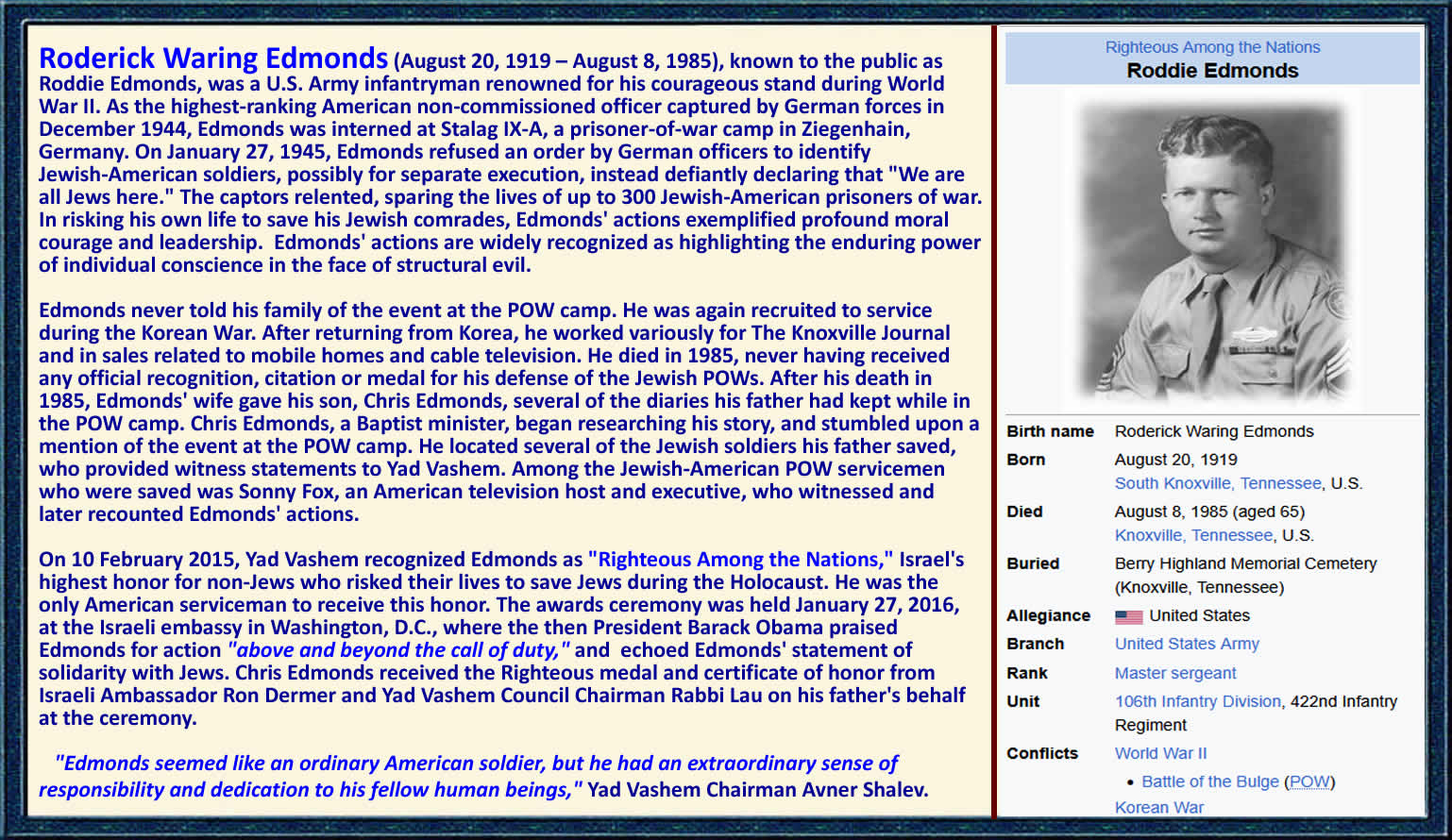
A Nazi commander ordered Jewish prisoners to step forward. Instead, 1,275 American soldiers moved as one and declared: “We are all Jews here.” Then came the order that would test everything Edmonds believed about leadership, duty, and humanity. Major Siegmann, the camp commandant and a fanatical Nazi, announced that at the next morning’s roll call, all Jewish American prisoners were to identify themselves and step forward. The Jewish soldiers understood immediately what this meant. This wasn’t record-keeping. Jews sent to separate facilities rarely returned. Rumors had reached even the POW camps about what happened to Jews under Nazi control. These men had survived combat, only to face a different kind of death sentence. Some prepared to comply, hoping to spare their Christian comrades from punishment. The Nazis had made examples before - defiance meant beatings, starvation, even execution. But Edmonds had other plans. That night, as the order spread through the freezing barracks, he made a decision that would define his life and save hundreds of others. He gathered the men and sent a message through the bunks in urgent whispers: “Tomorrow morning, every man steps forward. All of us.” Some questioned him. Some were terrified. But Edmonds wasn’t asking - he was commanding. He was betting everything on a simple truth: courage becomes contagious when someone leads. The next morning dawned bitter and gray. The prisoners assembled for roll call, their breath hanging in the frozen air. Major Siegmann emerged expecting to see a small group of Jewish soldiers separated from the rest - easy to round up, easy to dispose of. Instead, he froze. All 1,275 American prisoners stood together in perfect formation. Protestant, Catholic, Jewish. Farm boys from Iowa, factory workers from Detroit, students from New York. Every single man had stepped forward. Siegmann’s face turned purple with rage. He stormed toward Edmonds, the man he knew must be responsible. “They cannot all be Jews!” he shouted. Edmonds stood at attention, calm and unwavering. “We are all Jews here,” he replied. For a moment, the world seemed to stop. Siegmann drew his Luger and pressed the barrel to Edmonds’ forehead. “Order the Jews to step forward,” he hissed, “or I will shoot you right now.” Edmonds didn’t flinch. “According to the Geneva Convention,” he said evenly, “we only have to give our name, rank, and serial number. If you shoot me, you will have to shoot all of us. And after the war, you will be tried for war crimes.” Silence stretched across the formation. Siegmann’s finger rested on the trigger. One twitch and Edmonds would be dead. But Edmonds had calculated something the Nazi hadn’t: the war was ending; Germany was losing. The Allies were closing in. And Nazis who murdered American POWs would face the gallows. Siegmann knew it too. His hand trembled. He looked from Edmonds to the wall of men standing unified behind him. He couldn’t shoot them all. And shooting their leader would accomplish nothing if the others refused to break. They weren’t going to break. With fury and dawning fear, Siegmann lowered the pistol, holstered it, and stormed away. Two hundred Jewish soldiers lived because 1,275 men refused to let them stand alone. The war ended months later. Edmonds returned home to Tennessee, married his sweetheart, raised a family, and sold mobile homes for a living. He lived quietly, never telling anyone what he had done: no interviews, no memoir, no self-promotion. To him, it wasn’t heroism - it was leadership. It was simply doing what was right when right needed doing. Edmonds died in 1985. His son, Chris, didn’t learn the full story until years later, when he began researching his father’s service and tracked down survivors who had been there that frozen morning. They remembered everything. They carried that moment with them for decades - the day a Tennessee sergeant proved that courage isn’t the absence of fear, but the refusal to let fear make you abandon your brothers. In 2015, seventy years after that morning at Stalag IX-A, Yad Vashem recognized Master Sergeant Roddie Edmonds as Righteous Among the Nations - the first and only American soldier to receive the honor reserved for non-Jews who risked their lives to save Jews during the Holocaust. But Edmonds had already received the only recognition that mattered: 200 men went home to their families because 1,275 soldiers refused to look away when evil demanded they choose who deserved to live and who deserved to die. They chose everyone. “We are all Jews here” was more than defiance. It was a declaration of a fundamental human truth: we stand together, or we fall apart. When someone draws a line and demands you abandon your brother, you don’t argue the line - you erase it by standing on the wrong side of it together. That’s not just how you defeat hate. That’s how you become unbreakable. |