 |
 |
|||
 |
|||
 |
 |
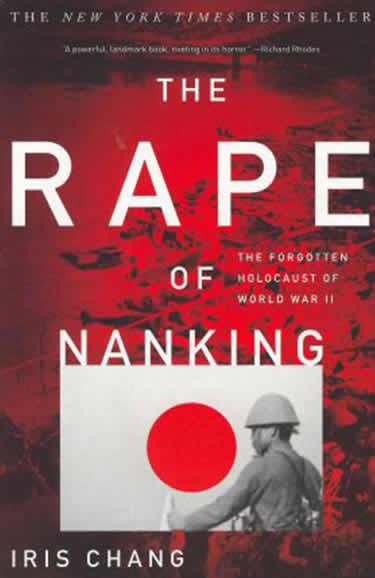 |
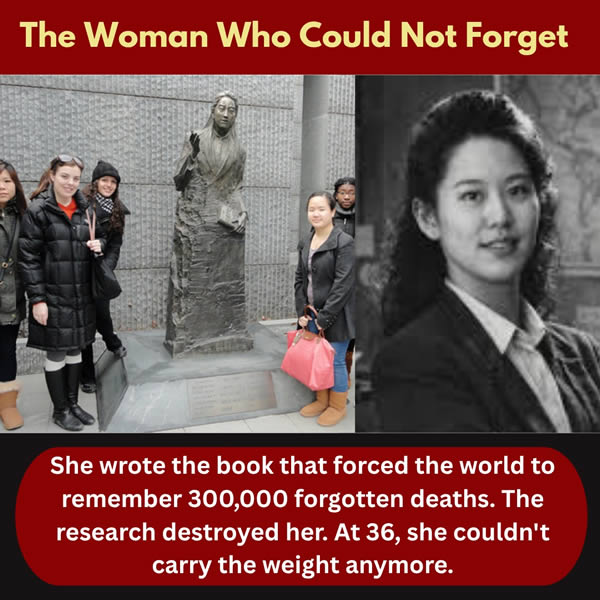
In 1994, Iris Chang walked into a conference and saw photographs that would change her life—and eventually end it. The images showed the Rape of Nanking: bayoneted babies, decapitated civilians, piles of bodies in a city that had become a killing field. In 1937, when the Imperial Japanese Army captured Nanking (now Nanjing), they unleashed six weeks of mass murder, rape, and torture that killed an estimated 200,000 to 300,000 Chinese civilians and soldiers. In 1997, Iris published "The Rape of Nanking: The Forgotten Holocaust of World War II". The book was an immediate sensation. It spent weeks on the New York Times bestseller list. It was translated into multiple languages. Suddenly, a 28-year-old Chinese-American woman was the face of historical justice, appearing on television, debating diplomats, demanding that Japan acknowledge and apologize for war crimes. She became a hero to millions. Chinese communities around the world celebrated her. Survivors wept with gratitude that someone had finally told their story. But behind the book tours and accolades, something was breaking inside Iris Chang. To write the book, she had spent years reading eyewitness accounts of unimaginable cruelty, testimonies of women gang-raped and then murdered, children killed in front of their parents, soldiers competing to see who could behead the most people, mass executions, live burials. She had read thousands of pages of this. She had looked at hundreds of photographs. She had sat with elderly survivors as they relived their trauma. She had stared into the abyss - and the abyss had stared back. "I can never escape from these images," she told a friend. "They're always with me." |
Iris didn't stop. She was a perfectionist who felt responsible for every unrecorded life. She moved on to other projects, including a comprehensive history of Chinese Americans. But friends and family noticed she was changing. She was exhausted, paranoid. She felt she was being followed, that agents of those who wanted her research silenced were watching her. Whether the threats were real or symptoms of deepening depression remains debated, but to Iris, the danger felt tangible. By 2004, she was researching her next book - about the Bataan Death March during World War II: another story of war crimes, another dive into human cruelty. Her death sent shockwaves through the world. How could someone so brilliant, so successful, so vital be gone? The answer was brutal in its simplicity: she had cared too much. She hadn't just reported history - she had internalized it. The trauma of the victims she wrote about became her own trauma. She carried their pain until it crushed her. Her husband Brett Douglas found a note she'd written, asking her family to remember her as she was before the illness - "full of life" and "dedicated to the truth." Today, when you visit the memorial in Nanjing, you see Iris's face. Her book is required reading in many schools. The massacre she rescued from obscurity is now taught around the world. She forced Japan to confront its past. She gave dignity to victims whose suffering had been erased. She proved that one person with a typewriter could force a global reckoning. But her story is also a warning about the cost of bearing witness. |