 |
 |
 |
 |
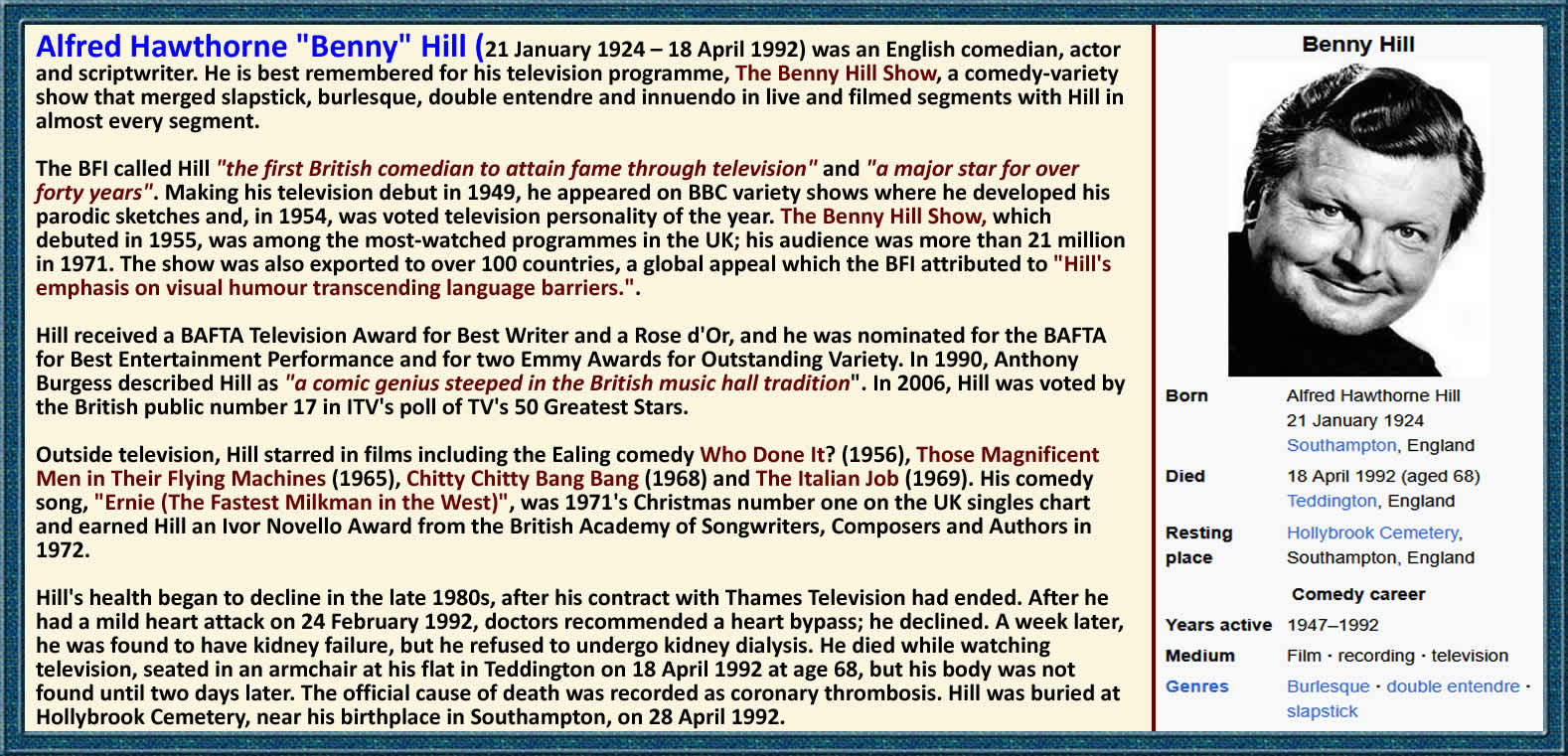
| During the filming of The Italian Job in 1969, Michael Caine found himself sharing scenes with one of Britain’s most unlikely comedic forces — Benny Hill. Caine, already on his way to becoming one of the most recognizable faces in British cinema, later spoke of Hill with unmistakable fondness. He once described him as having “the face of an evil cherub,” a phrase that perfectly captured the contradiction at the heart of Hill’s appeal: mischievous, cheeky, and slightly wicked on screen, yet somehow still innocent and boyish at the same time. What surprised Caine most was how different Hill was off camera. Away from the broad slapstick and exaggerated expressions that made millions laugh, Hill was quiet, reserved, and deeply polite. He didn’t command attention. He didn’t seek praise. But when it came time to perform, his comic timing was flawless, his instincts sharp, and his ability to make others laugh undeniable. Both men had come from modest beginnings in London. Caine, born in Rotherhithe, brought a working-class toughness and realism to his roles that audiences immediately connected with. Hill, despite global fame from The Benny Hill Show, never truly embraced celebrity life. He lived simply, avoided extravagance, and remained intensely private. Among fellow performers, he was known not just for his humor, but for his generosity — always willing to help shape a joke, improve a scene, or give someone else the laugh if it made the moment better. Caine later said that Hill wasn’t just funny — he was someone who genuinely loved making people laugh, even if he stayed far from the spotlight when the cameras stopped rolling. And yet, behind all that laughter, there was quiet isolation. In his later years, Benny Hill lived largely alone, maintaining few close relationships and retreating further from public life. When he died on April 20, 1992, at the age of 68, he was found alone in his London flat — a heartbreaking contrast to the joy and chaos his comedy had brought to living rooms around the world. It is one of those stories that feels unfair: a man who made millions laugh, spending his final days in silence. But perhaps his true legacy isn’t in how he died — it’s in how he lived and what he gave. His sketches still replay. His theme music is instantly recognizable. His expressions, chases, and wordless jokes continue to cross language barriers and generations.And in the memories of people like Michael Caine, who saw past the character and knew the gentle, modest man behind the mischief, Benny Hill is remembered not just as a comic icon — but as a kind, talented soul who simply wanted to make the world laugh. Sometimes the brightest entertainers carry the quietest burdens. And sometimes, long after the laughter fades from the stage, it continues to echo in the lives of those who needed it most. |