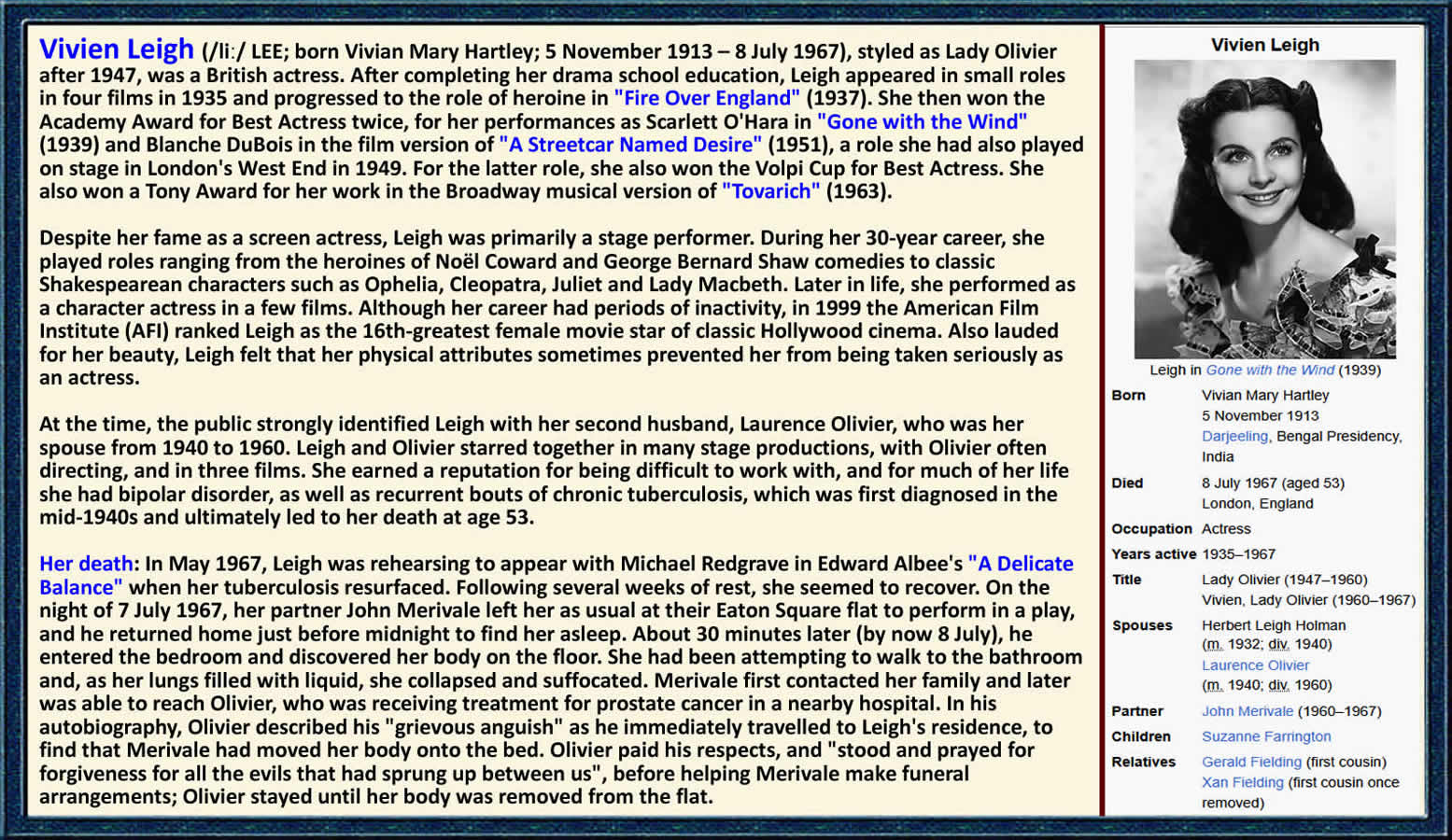
 |
 |
 |

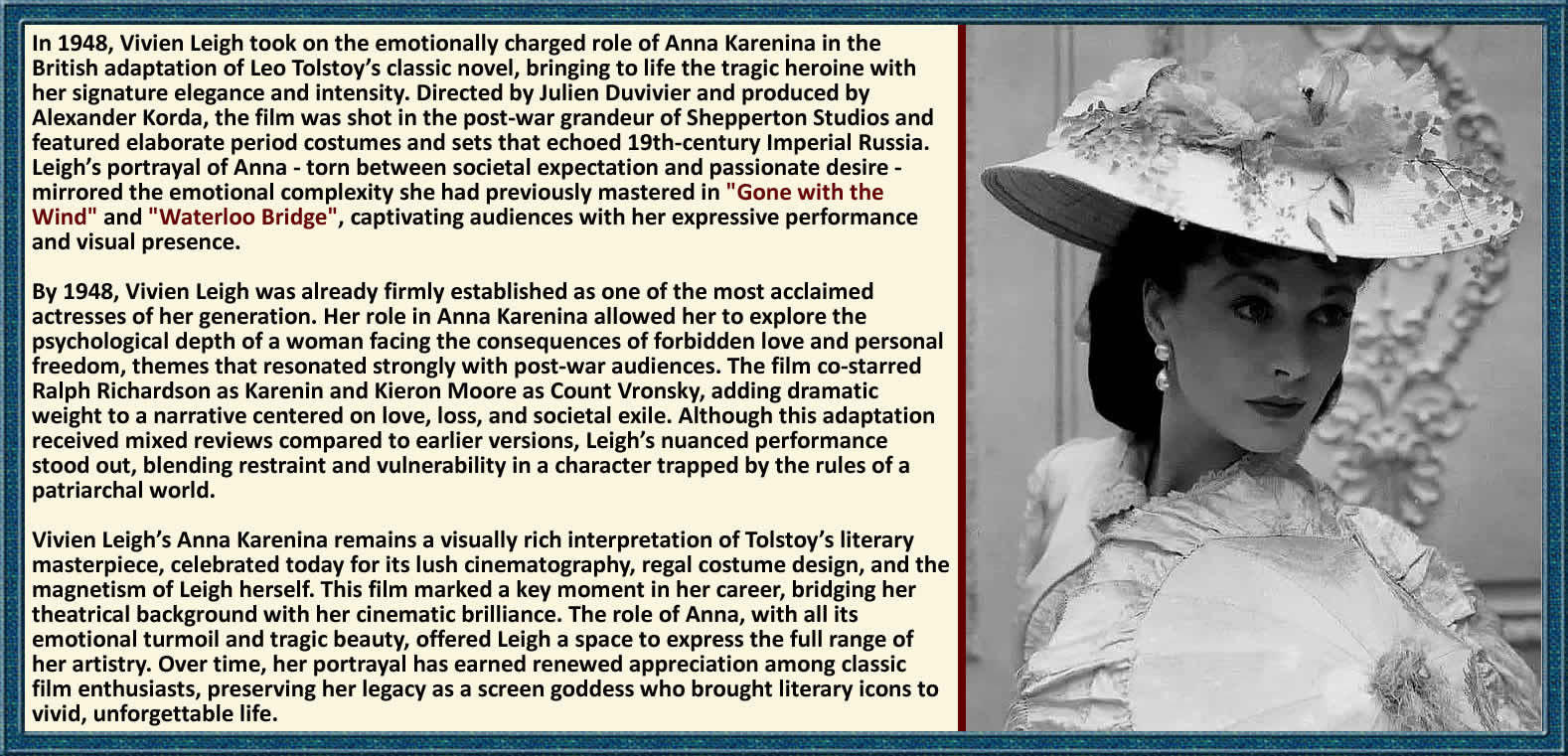
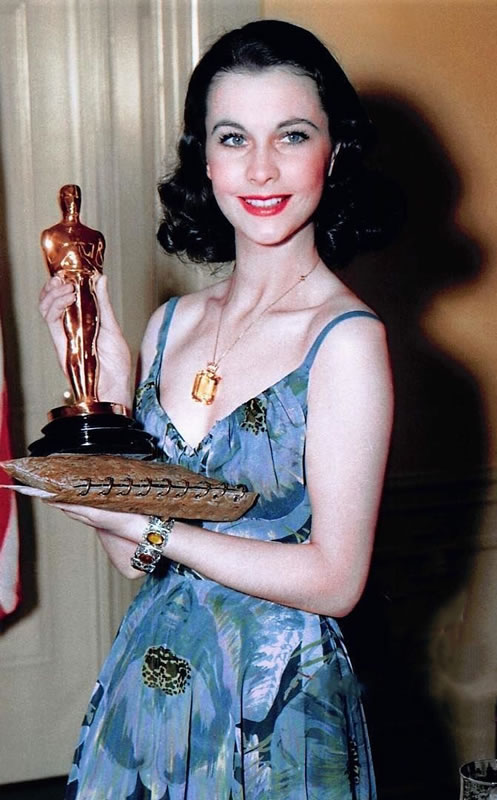
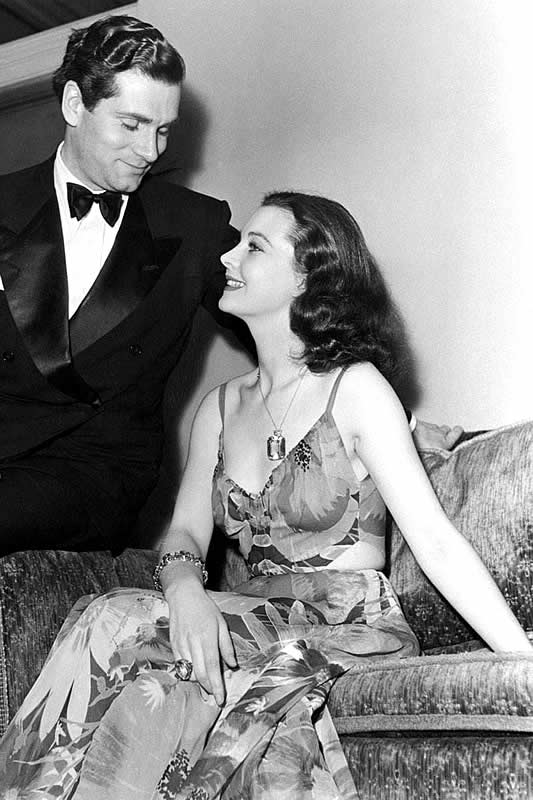
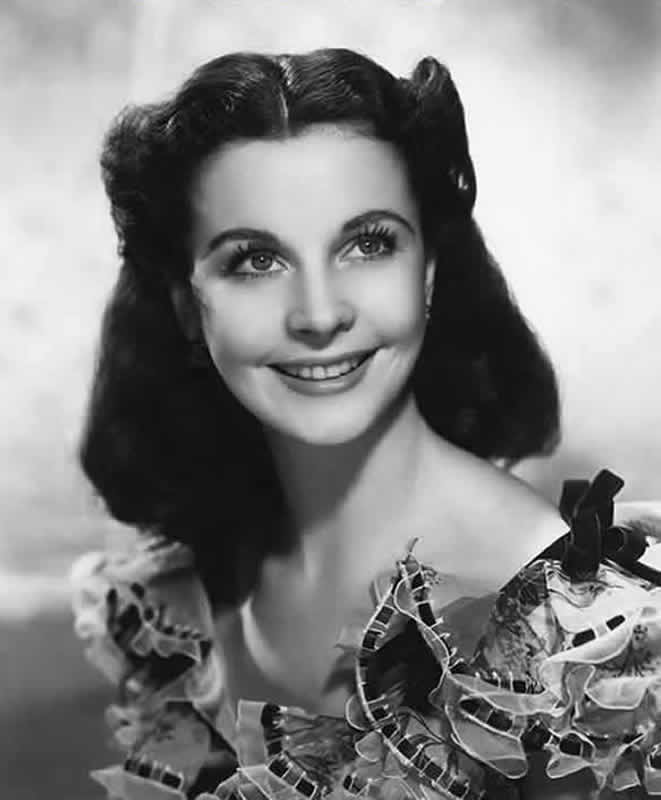
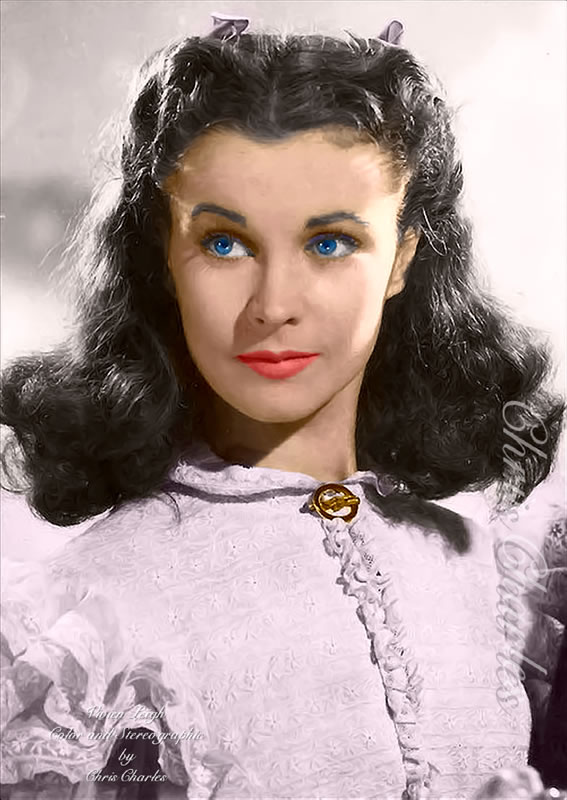
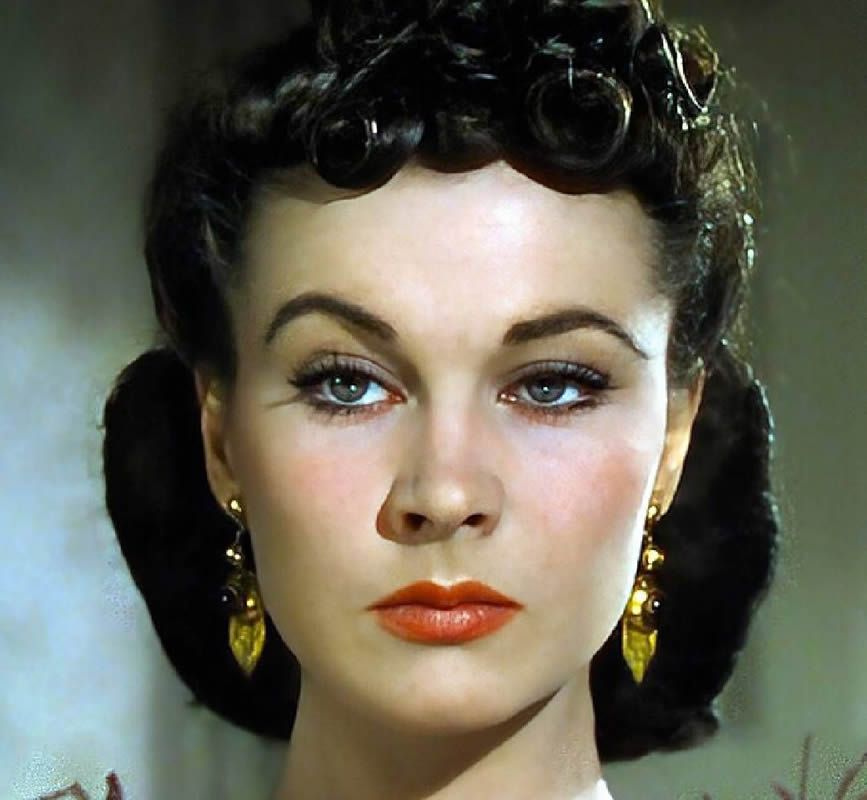
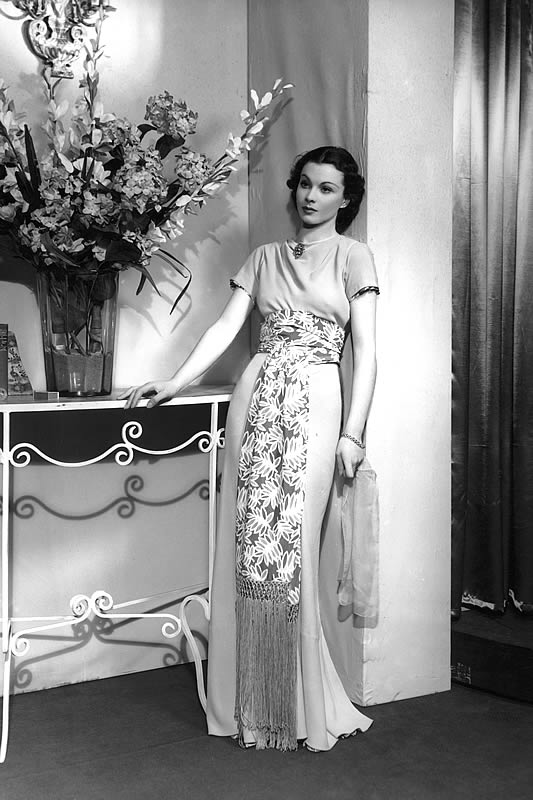
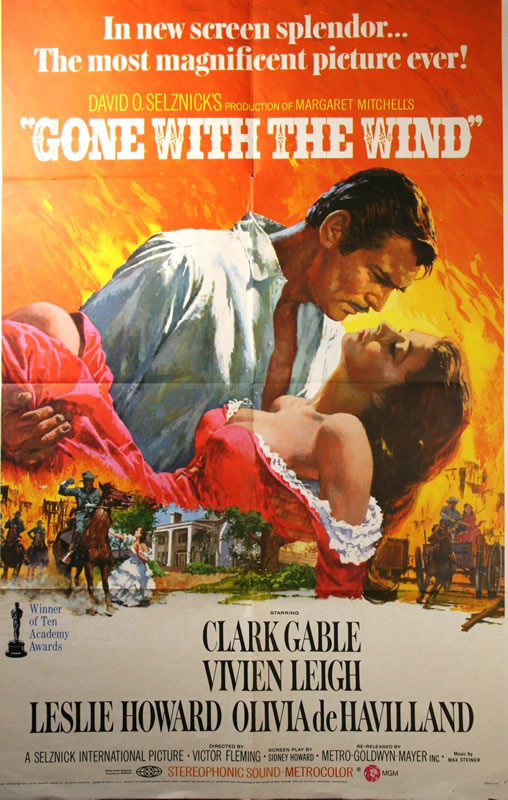
| She won an Oscar and the world's most famous actor photographed her triumph. They were both married to other people. Within twenty years, her mind would destroy their love. This is February 29, 1940 - a leap year night, the Academy Awards ceremony at the Cocoanut Grove nightclub in Los Angeles. Vivien Leigh sits in the audience, heart pounding. She's been nominated for Best Actress for her role as Scarlett O'Hara in "Gone with the Wind" - the most anticipated film in Hollywood history. Beside her sits Laurence Olivier, already considered the greatest actor of his generation: handsome, brilliant, magnetic - and not her husband.
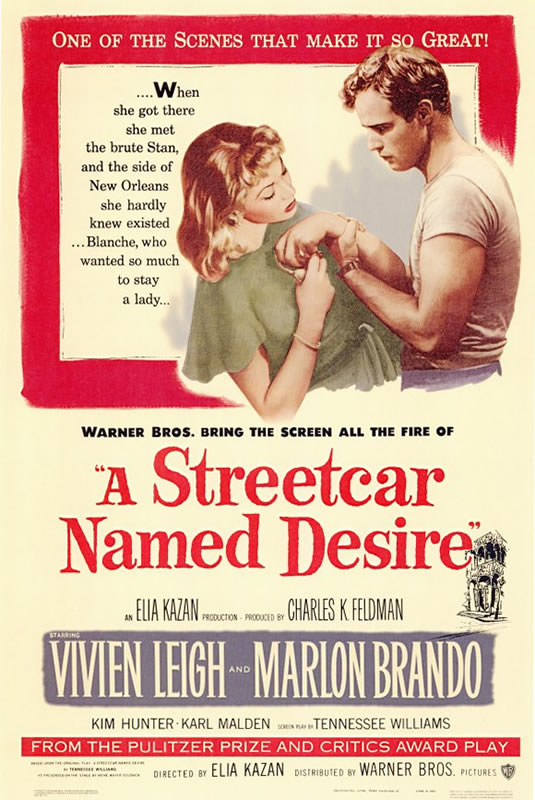
Vivien is married to Leigh Holman, a lawyer back in England. Olivier is married to Jill Esmond, an actress. But for the past three years, Vivien and Olivier have been conducting a passionate, scandalous affair that has destroyed both their marriages. Hollywood knows. London knows. Everyone knows. Tonight, they sit together publicly, defying propriety, while Vivien waits to hear if she's won. Spencer Tracy opens the envelope for Best Actress: "Vivien Leigh". The audience laughs. She thanks David O. Selznick. She's poised, elegant, perfect. But beneath the surface, something else is already stirring, something dark, something she doesn't yet understand. Vivien Leigh suffers from bipolar disorder - though in 1940, it's called manic depression, and even that diagnosis is years away. The highs are euphoric, the lows are devastating. The swings between them destroy everything in their path. That night in 1940, she's flying high: Oscar winner, famous and beloved by the most desirable man in the world. But the crash is coming. Vivien and Olivier finally marry in August 1940, after their divorces are finalized. It should be the beginning of their fairy tale. Instead, it's the beginning of a twenty-year battle against Vivien's deteriorating mental health. The manic episodes come first. She's electric, unstoppable, brilliant - but also reckless, hypersexual, impossible to control. She picks fights. She has affairs. She says cruel things she doesn't mean. Then the depression hits: dark, suffocating, endless. She can't get out of bed, can't work, can't find any reason to keep living. Olivier tries to help. He loves her desperately. But he doesn't understand what's happening - no one does. Psychiatry in the 1940s and 50s is primitive. Treatment options are limited to sedatives, electroshock therapy, and institutionalization. Vivien endures all of it. But she keeps working, keeps acting. In 1951, she plays Blanche DuBois in "A Streetcar Named Desire" - a woman descending into madness. It's the role she was born to play, because Vivien understands madness intimately now. She knows what it feels like to lose control of your own mind, to watch yourself do things you don't want to do, to be trapped inside a brain that has turned against you. She wins her second Oscar for the role. But the victory is hollow: her marriage is crumbling. Olivier is exhausted from trying to manage her episodes. He's also becoming resentful - his career has stalled while hers has soared. He's one of the greatest actors alive, but he's increasingly known as "Vivien Leigh's husband." The 1950s are brutal. Vivien's episodes become more frequent, more severe. During manic phases, she has affairs - including one with Peter Finch, one of Olivier's friends. She doesn't hide it, she can't hide it. The mania strips away her filters. Olivier forgives. Again and again, he forgives. But forgiveness has limits. In 1960, after twenty years together, Olivier leaves. He's in love with someone else - Joan Plowright, an actress who is stable, calm, everything Vivien isn't. Vivien is devastated. Despite the chaos, despite the affairs, despite everything - she loves him. She's always loved him. Laurence Olivier is notified. The man who photographed her triumph in 1940 learns of her death in 1967. He's remarried. He has a new life. But when he hears, he weeps. Because despite everything - the mania, the affairs, the impossible cycles of love and destruction - Vivien Leigh was the great love of his life. At her funeral, he doesn't attend. It would be inappropriate given his new marriage - but he sends flowers. The card reads simply: "Good-night, sweet princess." On Oscar night in 1940 she was glowing with triumph. She would win another Oscar. She would deliver performances that are still studied today. She would be remembered as one of the greatest actresses who ever lived. But she would also lose the love of her life because her brain betrayed her. Because bipolar disorder stripped away her control, her stability, her ability to sustain intimacy. And she knew it was happening. That's the cruelest part. During her lucid periods, she was aware; she apologized to Olivier; she begged him not to leave - she understood what the illness was doing to both of them. But understanding didn't help: she couldn't stop the cycles; she couldn't fix her own brain. In 1940, she was glowing with possibility: an Oscar, a brilliant career ahead, the love of the world's most desirable man. By 1967, she was dead at 53: alone, divorced, destroyed by tuberculosis and the relentless cycles of an illness she never asked for. |
 |
 |
 |
 |
|
 |
 |
|
 |
 |
|
 |