 |
 |
|
 |
 |
 |
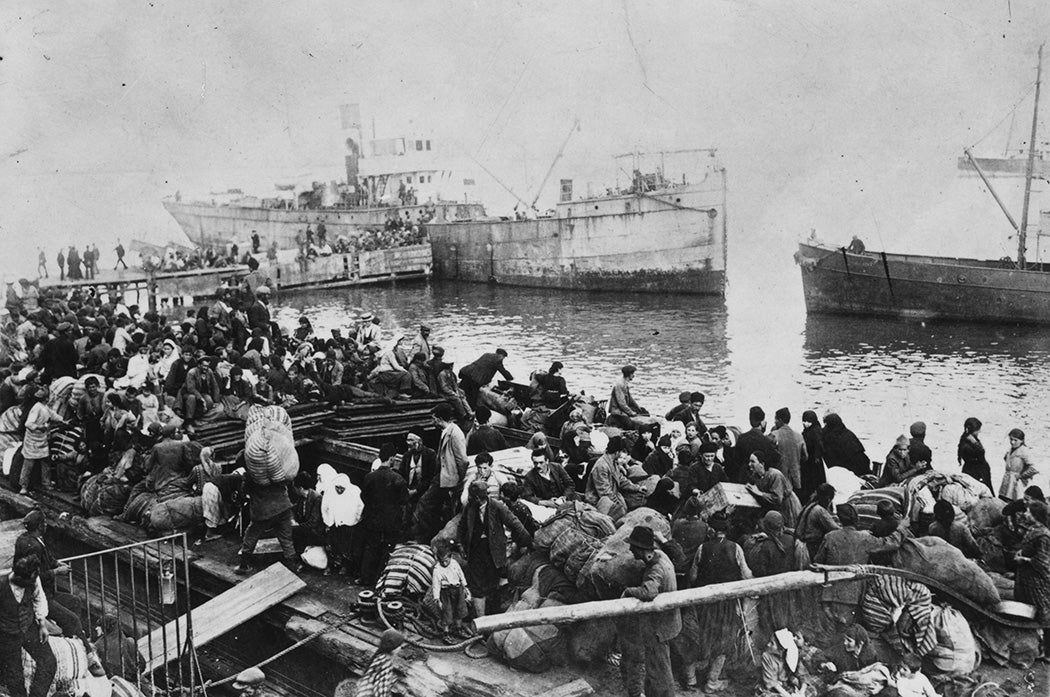 |
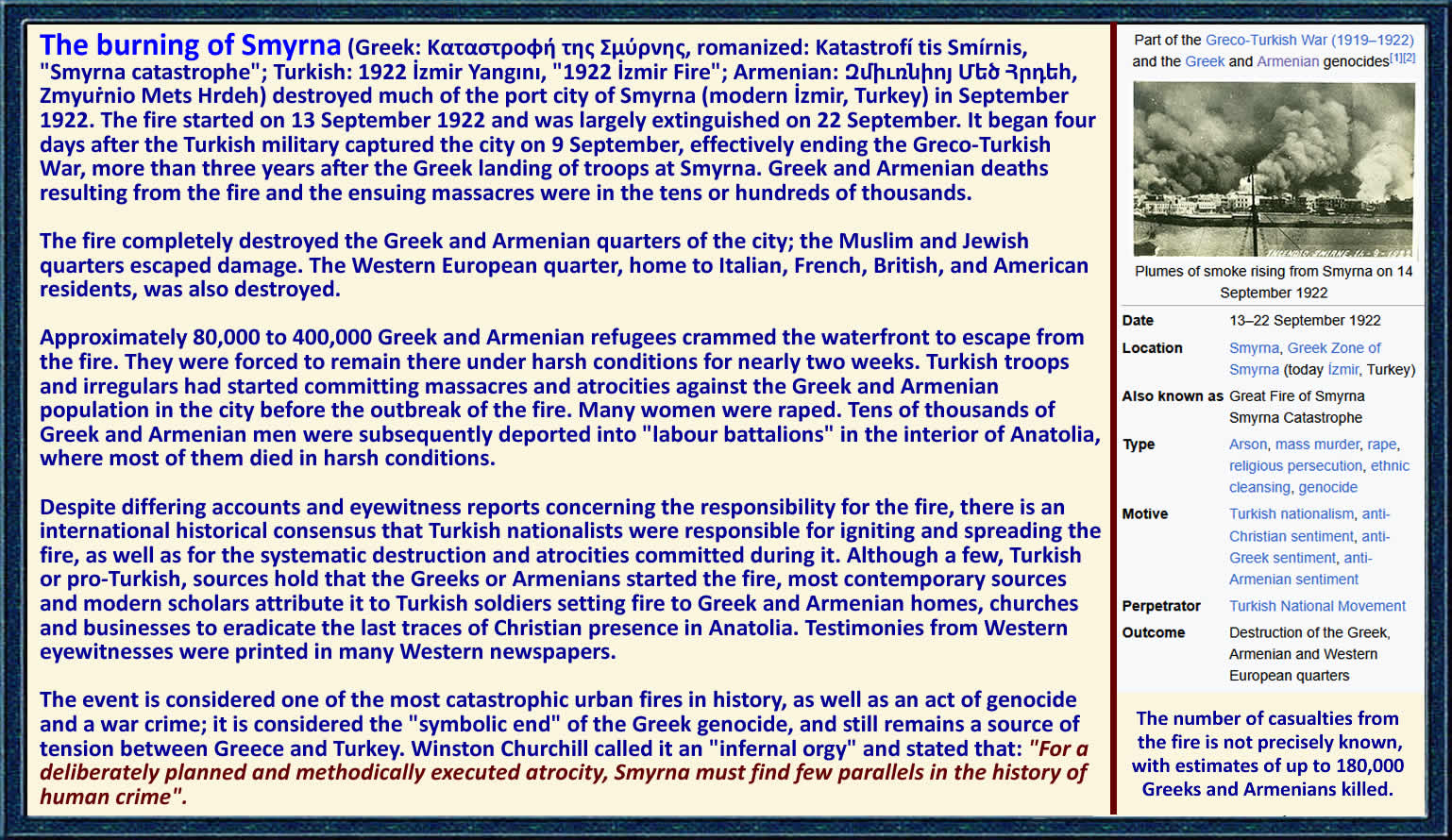
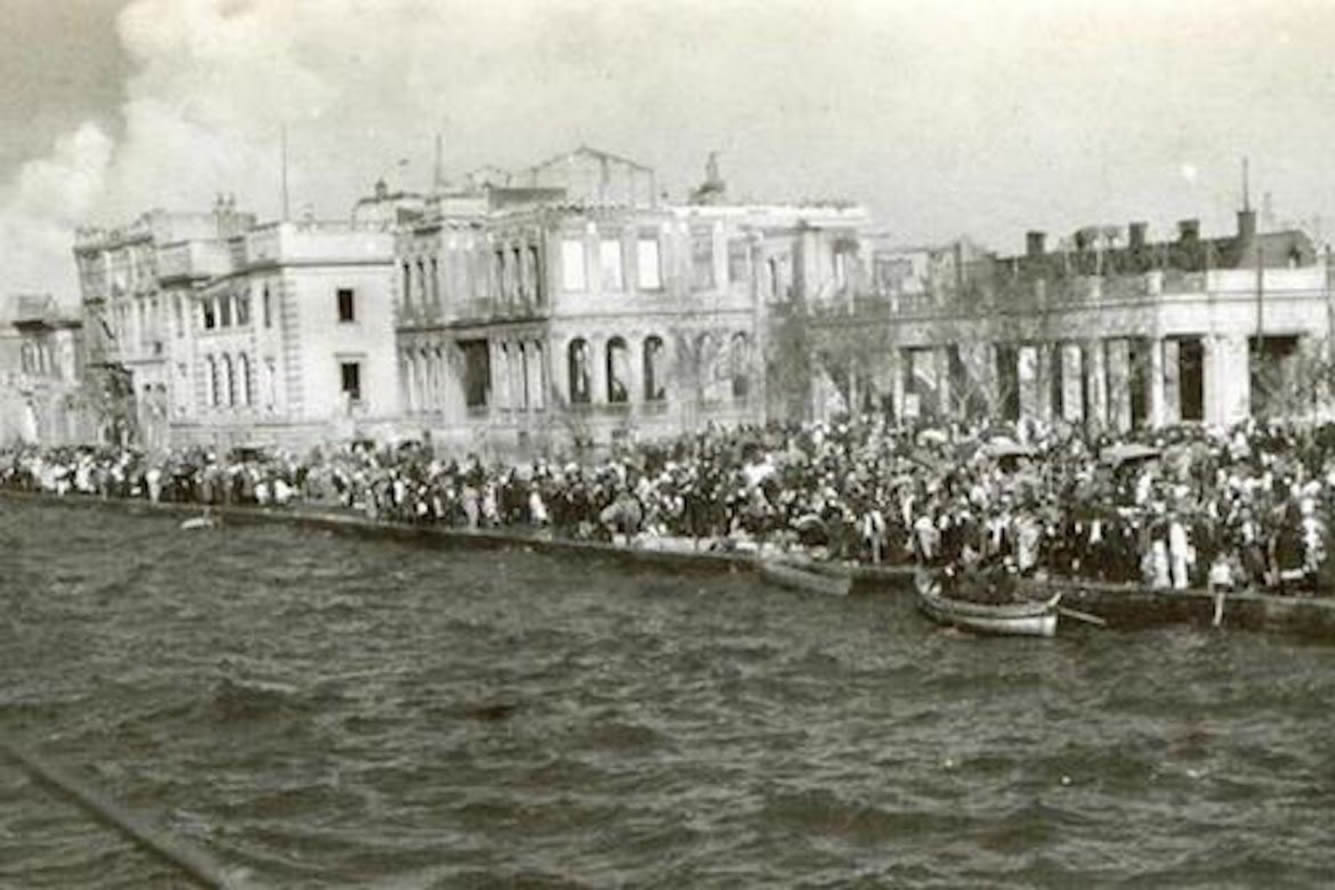
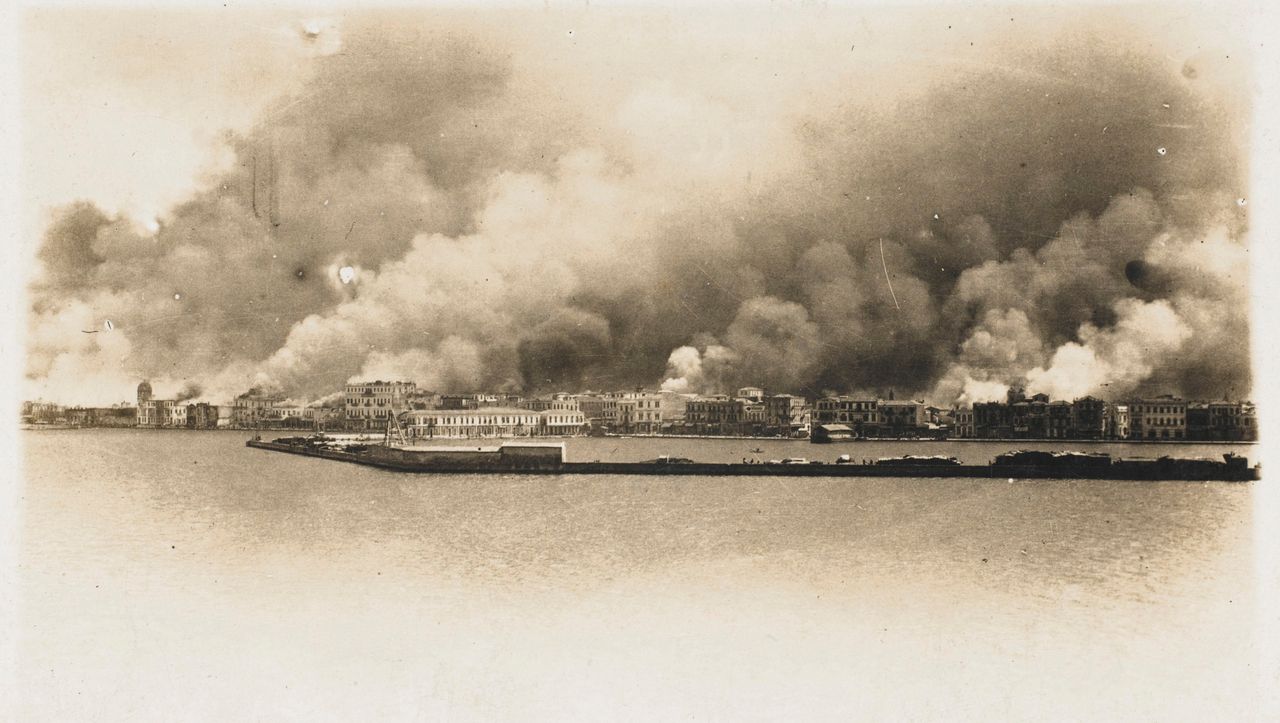
The screaming could be heard miles out to sea. On this day in 1922, George Ward Price stood aboard a British warship and watched an entire city burn. Before him rose what he described as “an unbroken wall of fire, two miles long.” The water had turned copper-red beneath the flames. Between that wall of fire and the sea, hundreds of thousands of desperate human beings were trapped upon the narrow waterfront. They were mostly Greeks and Armenians. Mothers clutched their children. Families carried whatever they had been able to save. The elderly lay exhausted on the stones. People pushed toward the water, only to discover that the ships anchored offshore were not coming for them. Behind them, Smyrna burned. Before them, the warships of the civilized world watched. The city had been one of the jewels of the eastern Mediterranean. Greeks, Armenians, Turks, Jews, Europeans, and Americans had lived and worked there. Its churches, schools, businesses, theaters, and cafés made Smyrna one of the most prosperous and cosmopolitan cities in the region. Its Christian history was older than most nations. Smyrna was one of the seven churches addressed in the Book of Revelation. In the second century, its bishop, Saint Polycarp, was brought before Roman authorities and ordered to renounce Christ. He refused and was burned alive. Now, nearly eighteen centuries later, the Christian city was about to be consumed. The catastrophe did not begin in Smyrna. It was the final, terrible scene in the destruction of the ancient Christian communities of Asia Minor. During the final years of the Ottoman Empire, Armenians, Assyrians, and Ottoman Greeks had endured deportations, death marches, massacres, forced conversions, and the destruction of their villages. The Turkish Nationalist movement that arose from the empire’s ruins continued the effort to create a religiously and ethnically homogeneous Turkish state. Smyrna was where the survivors ran when there was nowhere else to go. By September 1922, the Greek military campaign in Anatolia had collapsed. The retreating Greek army committed atrocities against Turkish civilians in response to Turkish massacres of Greeks and Armenians, and they burned several towns. It was a brutal war, and innocent people had suffered on both sides. But the civilians crowded into Smyrna were not an army. Many were refugees who had already escaped persecution once. They believed the presence of American, British, French, and Italian warships in the harbor would protect them. They were wrong. Turkish Nationalist troops entered Smyrna on September 9. At first, the occupation appeared relatively controlled. Mustafa Kemal had publicly ordered his soldiers not to harm civilians. The order was ignored. Looting, murder, and sexual violence followed. Armenian and Greek homes were broken into. Men were dragged away. Women disappeared into buildings. Foreign residents reported bodies lying in the streets. One of the first prominent victims was Chrysostomos, the Greek Orthodox metropolitan of Smyrna. The elderly bishop had refused to abandon his people. Turkish commander Nureddin Pasha summoned him, denounced him, and then handed him over to a hostile crowd. The mob beat and mutilated Chrysostomos before killing him. The French soldiers who reportedly witnessed the murder had orders not to intervene. Four days later, on September 13, the fires began. Minnie Mills, an American missionary and dean of the city’s American Collegiate Institute for Girls, watched what happened from the school. She later testified that she could see Turkish soldiers carrying containers of petroleum into buildings. “I could see plainly the Turks carrying tins of petroleum into the houses,” she recalled. Flames appeared immediately afterward. Other foreign witnesses reported seeing Turkish soldiers spreading flammable liquid, placing incendiary material inside buildings, and setting fires at multiple locations in the Armenian quarter. The government of modern Turkey has long disputed responsibility for starting the fire, and alternative accounts have blamed Armenians or Greeks. Yet numerous American, British, and European eyewitnesses attributed the burning to Turkish troops. The fact that the Greek and Armenian districts were destroyed while much of the Turkish quarter escaped the flames strengthened their conclusion. What cannot reasonably be disputed is what happened next. The wind drove the flames toward the waterfront. The fire passed from house to house and street to street. Churches, schools, hospitals, homes, and businesses disappeared into the inferno. Burning debris fell upon the refugees. The heat became so intense that people standing along the quay felt their clothing beginning to scorch. There was nowhere left to run. Turkish troops blocked many escape routes from the waterfront. Those who attempted to pass through the lines risked being robbed, beaten, arrested, or killed. Men of military age were separated from their families and marched away for deportation into the interior. Many never returned. Some refugees threw themselves into the harbor. Mothers entered the water holding their babies above their heads. Others attempted to swim toward the Allied ships. Boats pulled away as desperate hands reached for them. Sailors aboard the foreign vessels could hear the cries. George Ward Price wrote that the “frantic screaming of sheer terror” carried across the water for miles. American naval officers described the quay as a solid mass of humanity crushed between the flames and the sea. The Allied ships had crews, guns, launches, and room aboard their decks. What they did not have were orders to save the population. The governments of Europe and the United States were weary of war. Their leaders did not want a confrontation with Mustafa Kemal’s victorious army. They were already considering diplomatic relations, commercial agreements, and access to the new Turkey. The refugees of Smyrna had become an inconvenience. Some brave individual sailors, missionaries, diplomats, and relief workers disobeyed or stretched their instructions to save lives. They pulled survivors from the water, sheltered children, distributed food, and carried refugees to safety. Among them was Asa Jennings, a small, physically disabled American Methodist minister who refused to accept that nothing could be done. Jennings helped assemble ships and organized an evacuation that eventually carried enormous numbers of refugees across the Aegean. But before rescue came, the people on the quay endured days of hunger, thirst, terror, and separation. The precise death toll will never be known. Estimates vary widely. Thousands were murdered, burned, drowned, or died during the deportations that followed. Hundreds of thousands were driven permanently from their homes. American consul George Horton spent his final hours in Smyrna signing passes for anyone entitled to American protection. He departed as the city was burning. Looking back, Horton wrote that one impression remained above all others: “A feeling of shame that I belonged to the human race.” By the time the flames died, the Greek and Armenian quarters had been reduced to ashes. Smyrna’s Christian institutions were gone. Its surviving Christian population had been murdered, deported, or driven across the sea. The destruction of Smyrna marked the end of one of the oldest continuous Christian civilizations in the world. Communities that had survived Roman persecution, invasions, wars, and centuries of Ottoman rule disappeared from the lands where the apostles had preached and the earliest churches had stood. |