 |
 |
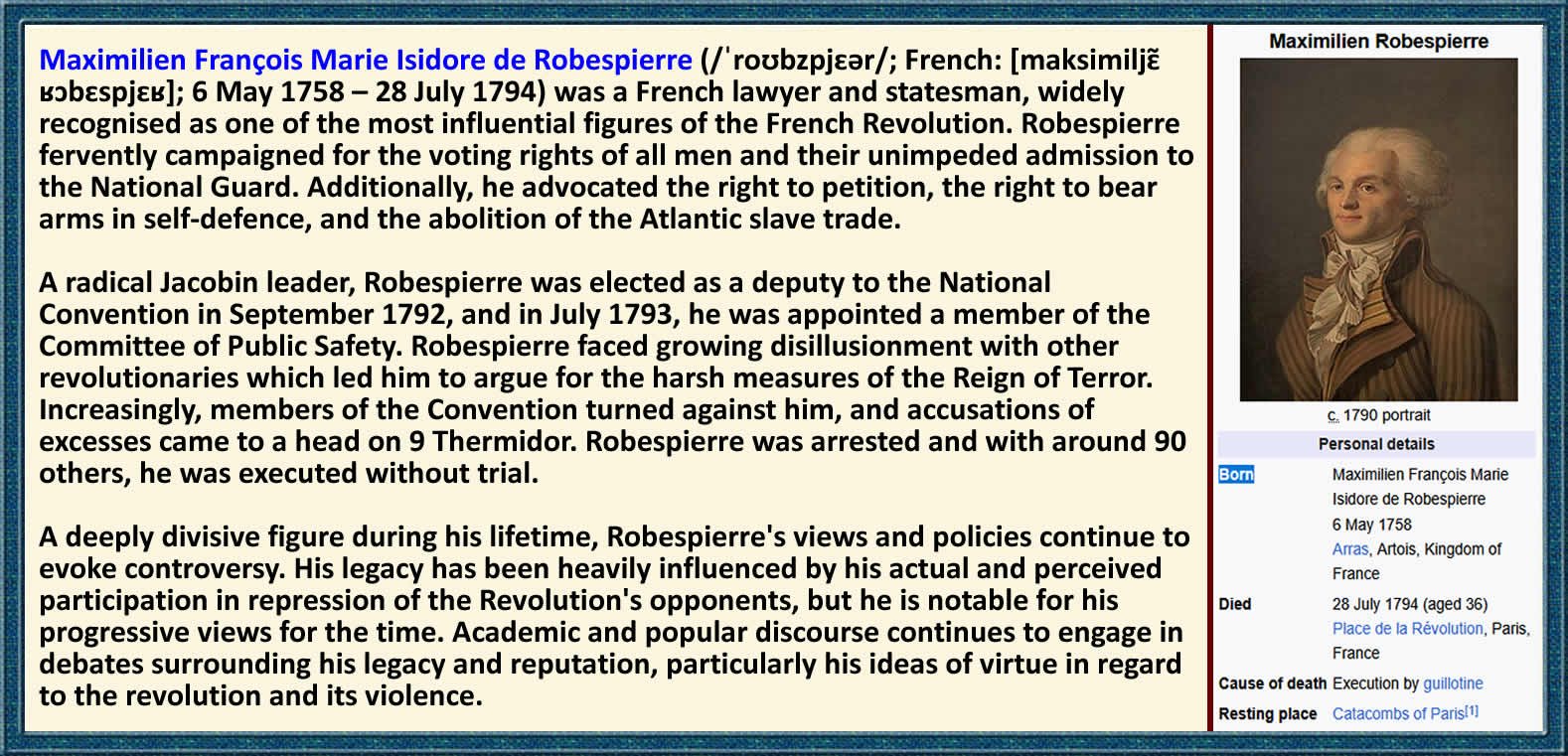
| Maximilien Robespierre sent thousands of people to the guillotine. He went too far and eventually he died by the same blade. Here's how a mild provincial lawyer got there.
As the French Revolution kicked into gear nobody would've picked Robespierre as a future mass killer. He was a lawyer from Arras with a quiet voice and a reputation for sticking rigidly to his principles. He argued against the death penalty. He'd spoken up against slavery too, and he talked endlessly about liberty and the rights of ordinary people, and he seemed to actually mean it.
They called him the Incorruptible. He didn't take bribes. Money and luxury never tempted him the way they tempted everyone around him. He set himself up as the pure conscience of the whole Revolution. And then that purity turned into something monstrous. France in 1793 was a mess: foreign armies on the borders, rebellion at home, the king already executed - everyone accusing everyone else of treason, food running short, Paris jumpy and frightened. Robespierre climbed to the top of the Committee of Public Safety, the emergency government running the country. Its answer to all that fear was one word: terror. Revolutionary tribunals put "enemies of the Republic" on trial. The evidence was often flimsy or missing altogether. The accused barely got to defend themselves. Aristocrats, priests, political rivals, and plenty of ordinary people grassed up by a neighbour with a grudge. The guillotine ran nearly every day. Robespierre had a tidy justification for all of it. Terror was just justice, he said. France couldn't become pure until the corruption and treason had been cut out of it. Show mercy to enemies and you're being cruel to the people. Neat logic. It also meant absolutely anyone could be branded an enemy and killed, which is exactly what started happening. The Revolution began eating its own. The moderate Girondins went first. Then Georges Danton, one of the loudest voices, dared suggest the bloodshed should slow down. Robespierre had him guillotined in April 1794. On his way out Danton reportedly warned that Robespierre would be next. He was right. Then it got worse. In June 1794 came the Law of 22 Prairial. Trials were stripped down to almost nothing: no defence lawyers, no witnesses. Two verdicts allowed: walk free, or die. Guess which one they handed out. Around 1,400 people were killed in Paris in the weeks that followed. Blood clogged the drains at the Place de la Révolution and the whole square reportedly started to stink. Somewhere in the middle of all this, Robespierre decided France needed a new religion. He invented The Cult of the Supreme Being to replace both Catholic worship and atheism, then threw a massive festival in Paris to launch it. He turned up in a bright blue coat and led the ceremony in front of a giant fake mountain built for the day. To the men watching, it looked like he'd started thinking of himself as a prophet. That did not go down well. By the summer of 1794 people were frightened of him. He pulled back from government for a while, then reappeared to give a speech warning that traitors were still hiding inside the Convention. He didn't say who. That was the fatal mistake: every man in that room now had to wonder if his own name was on the list. Deputies who couldn't stand each other suddenly had one thing in common: get rid of Robespierre before he gets rid of them. On 27 July 1794 he tried to speak in the Convention and they howled him down. He was arrested with his closest allies. His supporters broke him out and holed up in the Hôtel de Ville, waiting for an uprising that never properly came. Government troops stormed the building in the night. They found Robespierre with his jaw blown apart by a gunshot. Suicide attempt or a soldier's bullet; nobody has ever been sure. He survived it, bleeding heavily, unable to speak, his face bound up in a filthy bandage to hold the jaw together. There was no trial worth the name. On 28 July they carted him to the Place de la Révolution with 21 of his supporters. The streets were packed with people who'd come to watch the man who'd terrified all of Paris finally get his turn. Some of the condemned had to be carried up the steps. Robespierre climbed them himself. Then the executioner reached down and tore the bandage off his shattered jaw to give the blade a clean drop. Robespierre screamed. Then the blade fell. He'd started out as a gentle lawyer who wanted to abolish the death penalty. He ended face down under the machine he'd been feeding for months, responsible for thousands of deaths. He always said terror would purify France. In the end it just came for him too. |